For many years, fashion followed a largely linear system: extract resources, manufacture garments, sell them and dispose of them when they were no longer wanted. Australian brands exploring circular fashion are attempting to interrupt that sequence.
In 2026, circularity is not limited to textile recycling. It can include made-to-order production, repair services, resale channels, modular design, material recovery and garments created for easier disassembly.
The central objective is to keep products and materials in useful circulation for longer.
Made-to-Order Production Reduces Guesswork
Traditional brands estimate demand long before a collection is sold. When those estimates are wrong, unsold garments may be heavily discounted, stored or discarded.
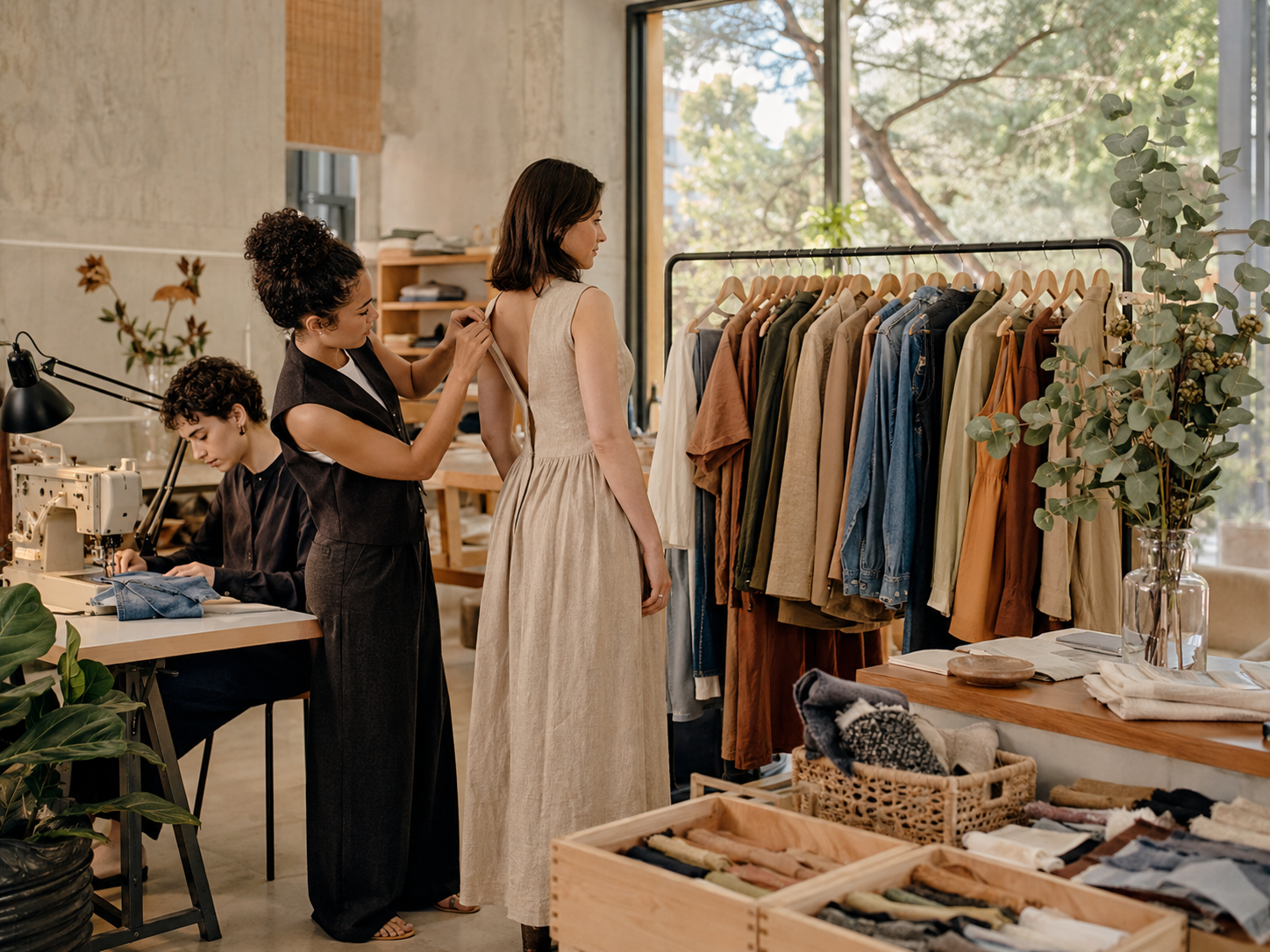
Made-to-order businesses reduce this risk by beginning production after a customer commits to a purchase. Citizen Wolf is a notable Australian example, combining demand-led manufacturing with personalised sizing.
This model does not remove every impact. Individual production and delivery still require materials, energy and logistics. However, it can reduce the structural problem of manufacturing large volumes without confirmed buyers.
Repair Services Extend Product Life
Repair is one of the most direct circular strategies because it preserves the energy, labour and materials already invested in a garment.
A strong repair program should explain which damage can be fixed, how customers submit products, whether replacement components are available and what costs may apply. Brands can also improve repairability before production by selecting accessible fastenings and avoiding unnecessarily complicated construction.
Denim labels such as Nobody Denim and Outland Denim operate in a category where visible mending, patching and alteration can become part of a garment’s character. Customers should check the current services offered by each company because repair policies may change.
Resale Creates a Second Revenue Model
Resale allows brands to participate in the value of products after the first transaction. It may also give customers access to better-quality clothing at lower prices.
A successful branded resale program needs clear standards for condition, authentication, cleaning and pricing. Without those controls, resale can become difficult to navigate or expensive to operate.
For labels such as ELK, which produces recognisable clothing and accessories, long product life and design identity can support second-hand demand. Independent resale marketplaces also help circulate Australian fashion even when a brand does not operate its own platform.
Designing for Material Recovery
Recycling is often treated as the final answer, but many garments combine fibres, coatings, threads, zippers, elastic and decorative components. These mixtures can be difficult to separate.
Circular design considers the issue earlier. A.BCH has been associated with design approaches that examine material selection and end-of-life outcomes. This perspective shifts responsibility from waste processors back to the design stage.
Australia’s Seamless clothing stewardship initiative provides broader industry context by encouraging shared responsibility and movement toward a circular clothing system.
Questions to Ask Before Trusting a Circular Claim
Consumers should check whether a take-back program explains what happens to collected products. Reuse, resale, fibre recycling and disposal are different outcomes and should not be presented as interchangeable.
A repair service should also be reasonably accessible. A program available only under narrow conditions may have limited practical impact.
The most promising circular Australian brands are those connecting several strategies: producing appropriate quantities, designing durable products, supporting repair and creating credible pathways for garments that owners no longer need.
Circular fashion will not be achieved through recycling bins alone. It depends on changing how clothing is designed, sold, maintained and valued throughout its entire life.