
Accessible Accommodation Is Becoming a Tourism Priority
Australia’s accessible tourism industry is evolving as destinations recognise that successful holidays require more than wheelchair-friendly attractions.
For travellers with disabilities, accessible accommodation, suitable bathrooms, reliable transport and convenient recreational facilities are essential components of the travel experience.
Tourism businesses are increasingly examining how these services can work together to support guests with mobility restrictions, sensory requirements and other accessibility needs.
The economic significance is considerable. Tourism Research Australia’s latest accessible tourism analysis, using 2024 visitor data, estimated expenditure of AUD 29.2 billion among travellers with accessibility requirements.
The findings reinforce the commercial opportunities available to destinations that invest in genuinely inclusive visitor experiences.
New South Wales Invests in Accessible Holiday Facilities
A notable example emerged in April 2026 when the New South Wales Government announced AUD 500,000 for accessibility improvements at Sails Holiday Park in Belmont, Lake Macquarie.
Working alongside Lake Macquarie City Council, the project includes accessible cabins, safari tents, improved pathways, wheelchair-friendly ramps and swimming facilities incorporating specialised lifting equipment.
Accommodation features include adjustable kitchen benchtops, accessible bathrooms and automated fittings intended to improve visitor independence.
According to the government announcement, bookings for the park’s existing inclusive accommodation had increased by nearly 22% annually since its introduction, with more than 800 travellers using the facilities.
The initiative demonstrates how accessible accommodation can benefit families and regional tourism operators simultaneously.
Further details are available through the official NSW Government announcement published April 22, 2026.
Sydney and the Blue Mountains Offer Accessible Sightseeing
New South Wales also provides established accessible experiences at major tourism landmarks.
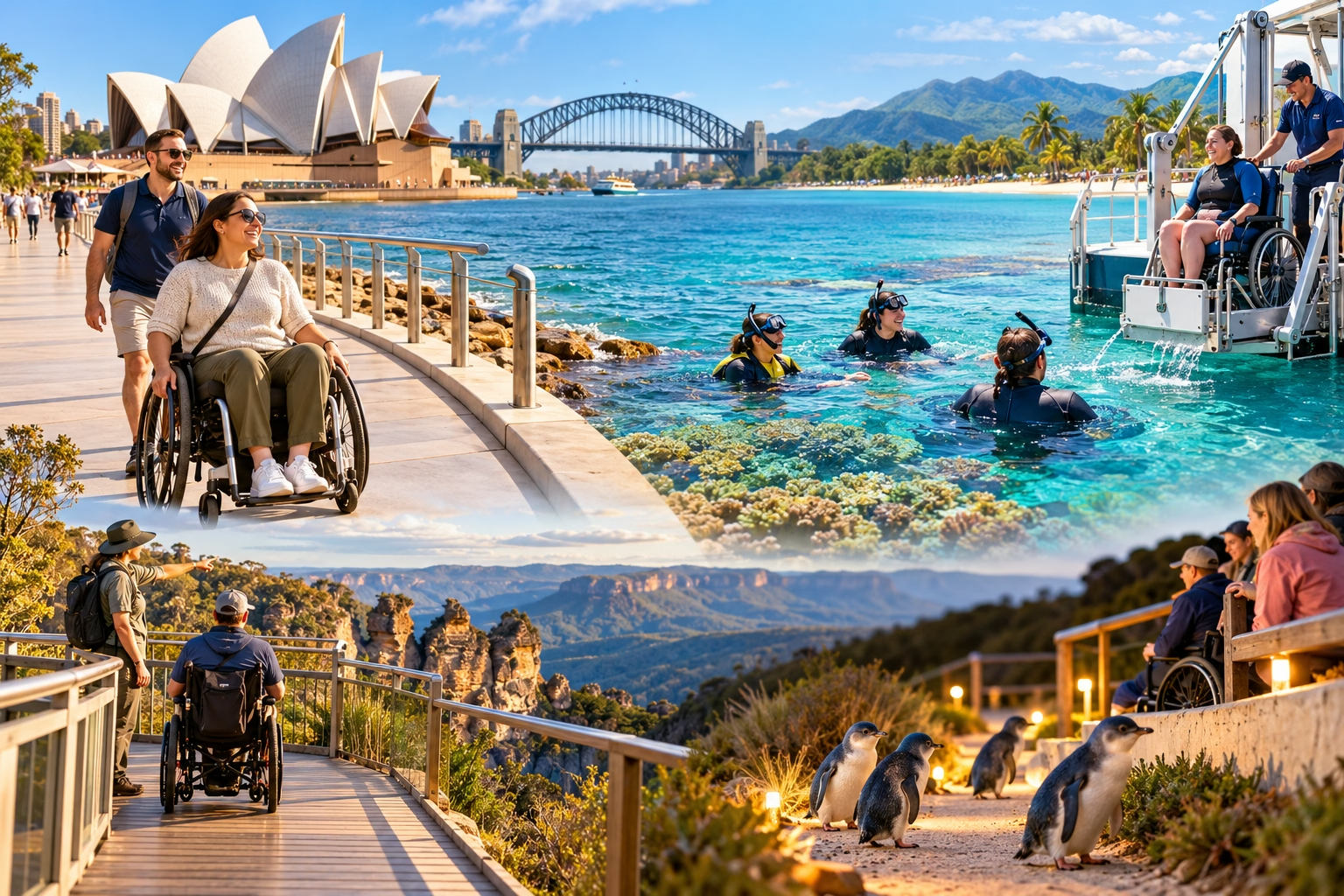
Sydney Opera House operates mobility access tours and selected performances designed for audiences requiring sensory adjustments.
The nearby Bondi Beach promenade offers level access, providing opportunities to enjoy the coastal atmosphere without navigating sandy terrain.
Further inland, visitors can explore sections of the Blue Mountains through wheelchair-friendly walking routes, including the Three Sisters Walk.
Accessible sightseeing arrangements and specialised transport providers can help tourists explore the region’s dramatic sandstone scenery.
These destinations illustrate why accessibility information must cover complete visitor journeys, including arrival, movement between attractions and participation in activities.
Queensland and Victoria Demonstrate Inclusive Destination Planning
Queensland has developed options for travellers seeking accessible coastal and marine experiences.
In Cairns, accessible waterfront pathways connect recreational areas with tourism accommodation, while selected beaches offer specialised wheelchair equipment.
At Agincourt Reef, Quicksilver Cruises provides marine access facilities that enable some visitors with mobility restrictions to experience the Great Barrier Reef more directly.
Victoria offers a different example through Phillip Island’s Penguin Parade, where accessible viewing arrangements and sensory-support services accommodate diverse visitor requirements.
Both destinations demonstrate that accessible tourism can extend beyond urban environments into coastal recreation and wildlife encounters.
Better Information Can Strengthen Tourism Accessibility
Despite ongoing improvements, travellers must still investigate individual facilities before booking.
Accessible room descriptions should provide practical details about doorway widths, shower access, bed configurations, transfer space and available equipment.
Attractions should also communicate terrain conditions, transport limitations and requirements for advance assistance.
As Australia continues developing inclusive tourism infrastructure, destinations that combine reliable facilities with transparent information may be better positioned to attract visitors seeking comfortable, independent and memorable holidays.