The Margin Math Behind the Movement
Australian fashion’s deadstock story is often told as an environmental one, but the more disruptive shift is financial. For years, the industry’s default model has rewarded volume: negotiate prices down, accept higher minimum order quantities, and absorb the surplus as markdown inventory. Paula Mackenzie, a veteran fashion executive and former CEO of Topshop, argues that this legacy model is now a margin trap. “Buying product in line with gross sales, as we have always done,” she says, leads to over-purchasing and erodes full-margin value through inefficient systems.
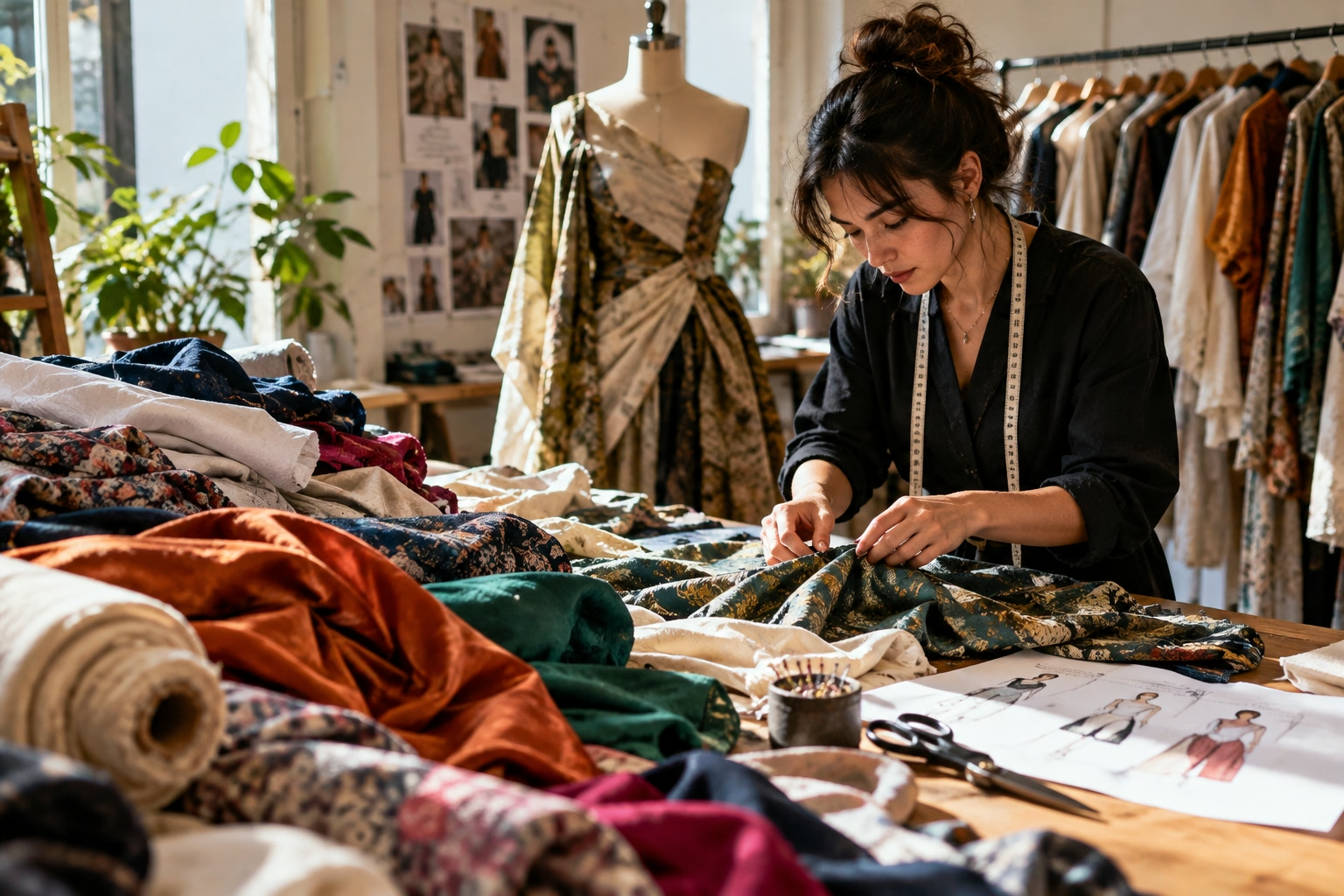
Deadstock interrupts that cycle. When a designer builds a collection from surplus fabric, the material cost is often lower than newly milled cloth, but the perceived value is higher because the supply is visibly limited. The garment does not compete on price with a mass-produced equivalent; it competes on uniqueness, traceability, and craft. That repositioning allows small Australian labels to hold price points that would be impossible with a conventional seasonal range.
Overproduction as the Invisible Supplier
The scale of the available material is substantial. Seamless benchmark data show that unsold clothing in Australia increases by about 17 per cent year on year, and minimum order requirements can push brands to order up to 30 per cent more than they need. That surplus does not disappear; it becomes deadstock, sample-room residue, or landfill. The 2026 Australian Financial Review reporting on Seamless notes that more than 880 million garments, totalling about 220,000 tonnes, ended up in Australian landfill.
For a new generation of labels, that is not a waste problem—it is a sourcing opportunity. Deadstock procurement turns a cost centre in the supply chain into a feedstock for higher-margin, short-run production.
The Risk of Romanticising Scarcity
The premium positioning is not automatic. Deadstock comes in inconsistent quantities, colours, and fibre compositions, which makes scaling difficult and quality control labour-intensive. The Social Outfit’s model—premium deadstock for the majority of collections, small runs, local production—works because the organisation is built around that variability rather than fighting it.
The brands that succeed treat deadstock as a design parameter, not a marketing badge. They price for the labour of sorting, matching, and cutting around limited cloth. In doing so, they turn the industry’s overproduction problem into a margin strategy that rewards restraint rather than volume.