Australia’s clothing scene is a blend of sophistication and laid-back vibes, shaped by its outdoor culture, relaxed pace of life, and appreciation for both style and comfort. Knowing how to navigate the fine line between formal and casual wear in Australia is key to making the right impression, whether you’re heading to a corporate meeting or a day at the beach.
The Characteristics of Formal Wear in Australia
In Australia, formal clothing is often a fusion of traditional Western styles with an emphasis on practicality, especially when it comes to fabric choices. For formal events such as business conferences, weddings, or upscale dinners, men typically wear suits or tuxedos, while women might wear elegant dresses or tailored pantsuits. In contrast to more rigid Western formal dress codes, Australia tends to favor a more relaxed approach to formal wear.
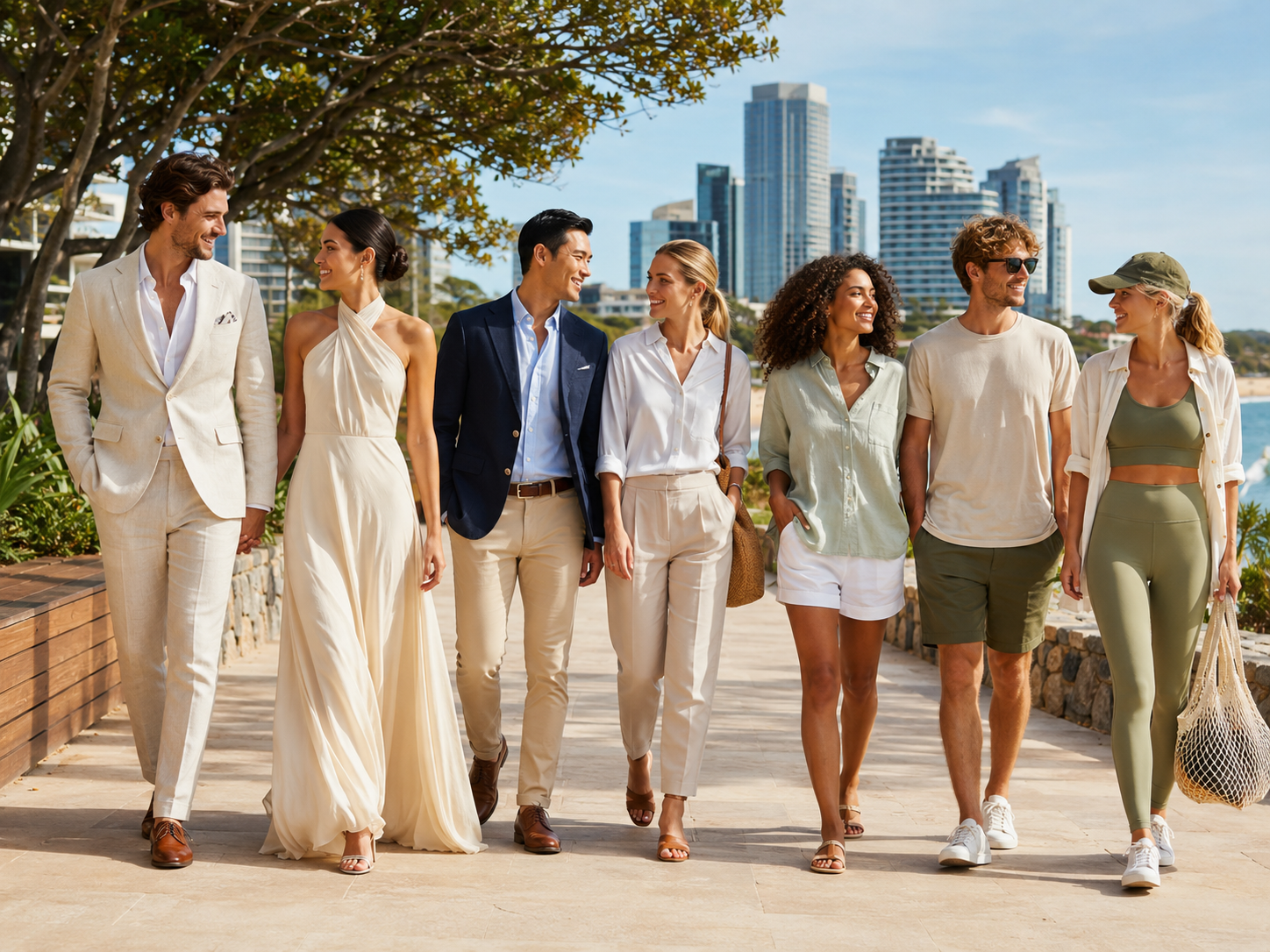
The local climate is a crucial factor in how formal attire is styled. Australian summer events, for example, may involve wearing linen or cotton suits, which are lighter and breathable, ensuring comfort even in the heat. Even the colors used in formal settings tend to be more varied, with bright blues, light greys, and other light tones making frequent appearances.
For formal business settings, corporate attire may vary by industry. More conservative fields like law or finance may require a full suit, whereas in other sectors like technology or creative industries, business-casual attire is often more common. The idea is to balance professional appearance with comfort, a hallmark of Australian business culture.
Casual Wear in Australia: Easy, Breezy, and Comfortable
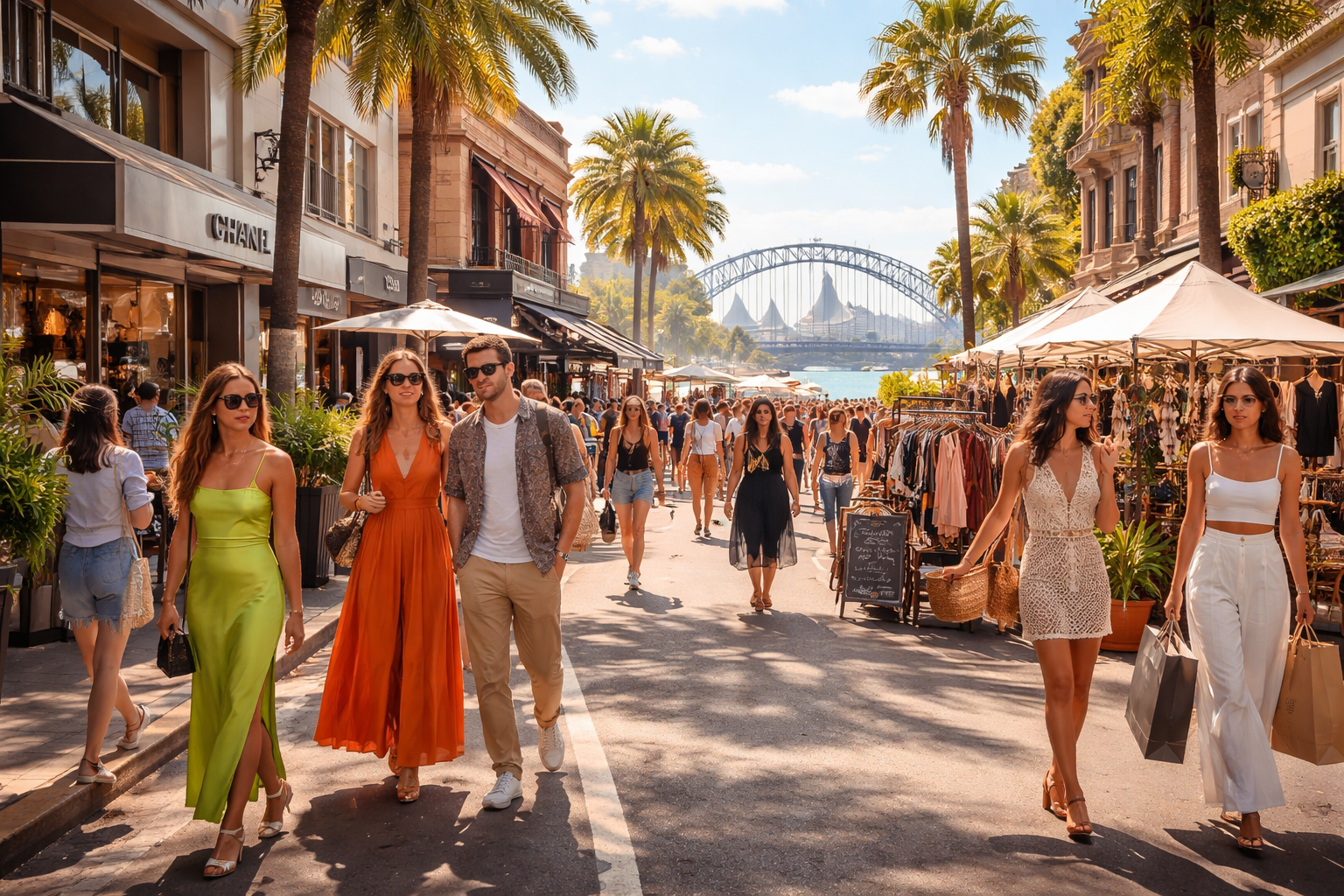
Casual wear in Australia is all about practicality and comfort, reflecting the country’s outdoor lifestyle. For men, casual clothing generally consists of well-fitted jeans, shorts, t-shirts, and button-up shirts. For women, it’s a similar story, with casual dresses, skirts, or pants paired with comfortable tops. Given the warm weather for much of the year, lightweight and breathable fabrics are common in both men’s and women’s casual wear.
In addition to casual daily outfits, Australians often wear activewear, especially in urban areas like Sydney and Melbourne, where fitness culture is popular. Gym clothes have become a part of daily wear, even when not participating in physical activities. This reflects a broader shift towards more functional and comfortable clothing in everyday life.
Blurring the Boundaries with Business-Casual Fashion
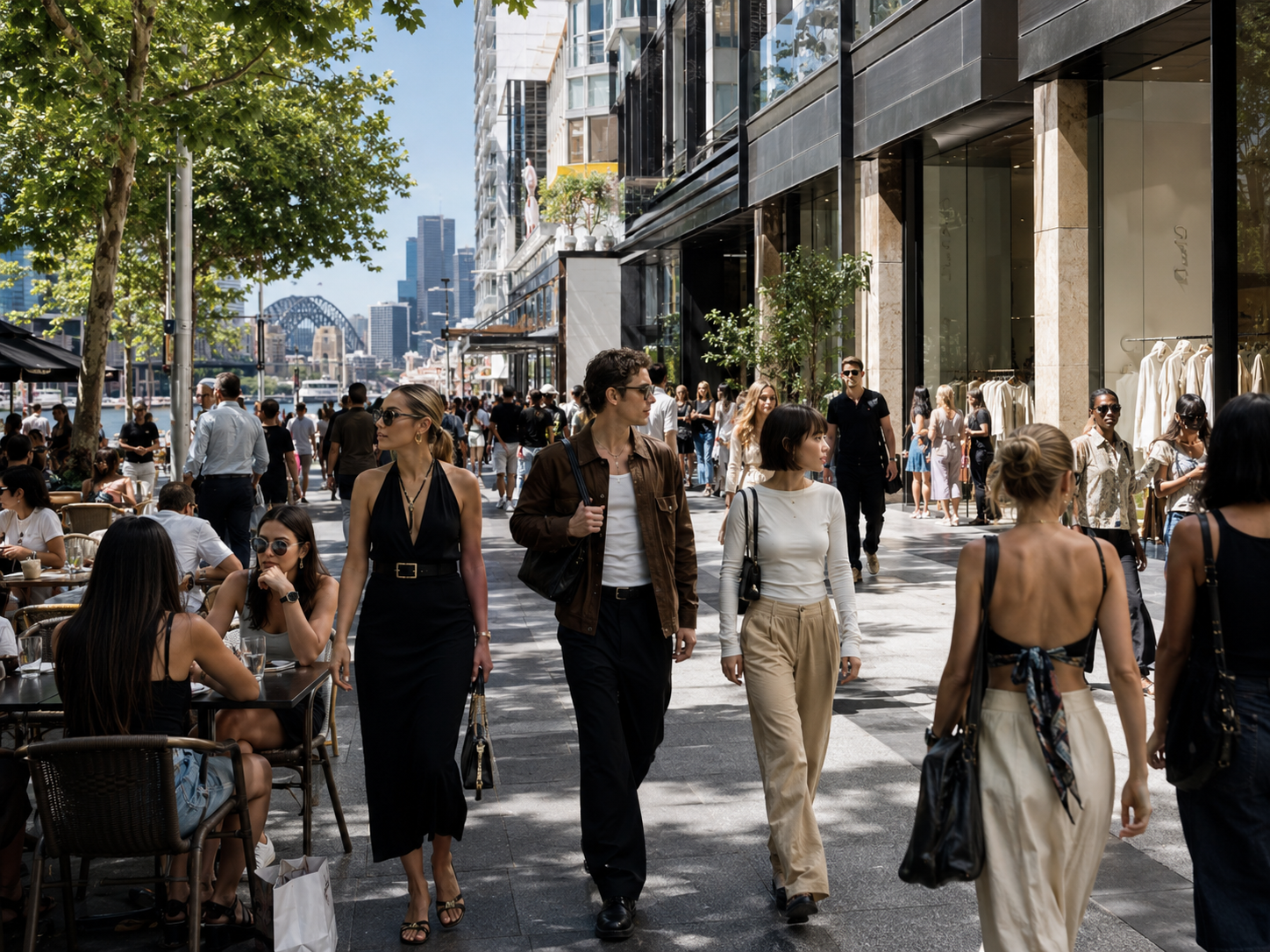
The business-casual dress code is widespread in Australia, especially in creative or more relaxed industries. It allows employees to adopt a professional yet comfortable look by pairing items like blazers with chinos, dresses with cardigans, or shirts with smart trousers. Business-casual attire also offers flexibility, giving individuals the freedom to express personal style without compromising on professionalism.
For Australians, the business-casual look can extend to many work environments. For example, tech companies often allow employees to wear more relaxed outfits such as polo shirts, smart jeans, and sneakers, while still maintaining an overall polished appearance.
Fashion Forward and Sustainable
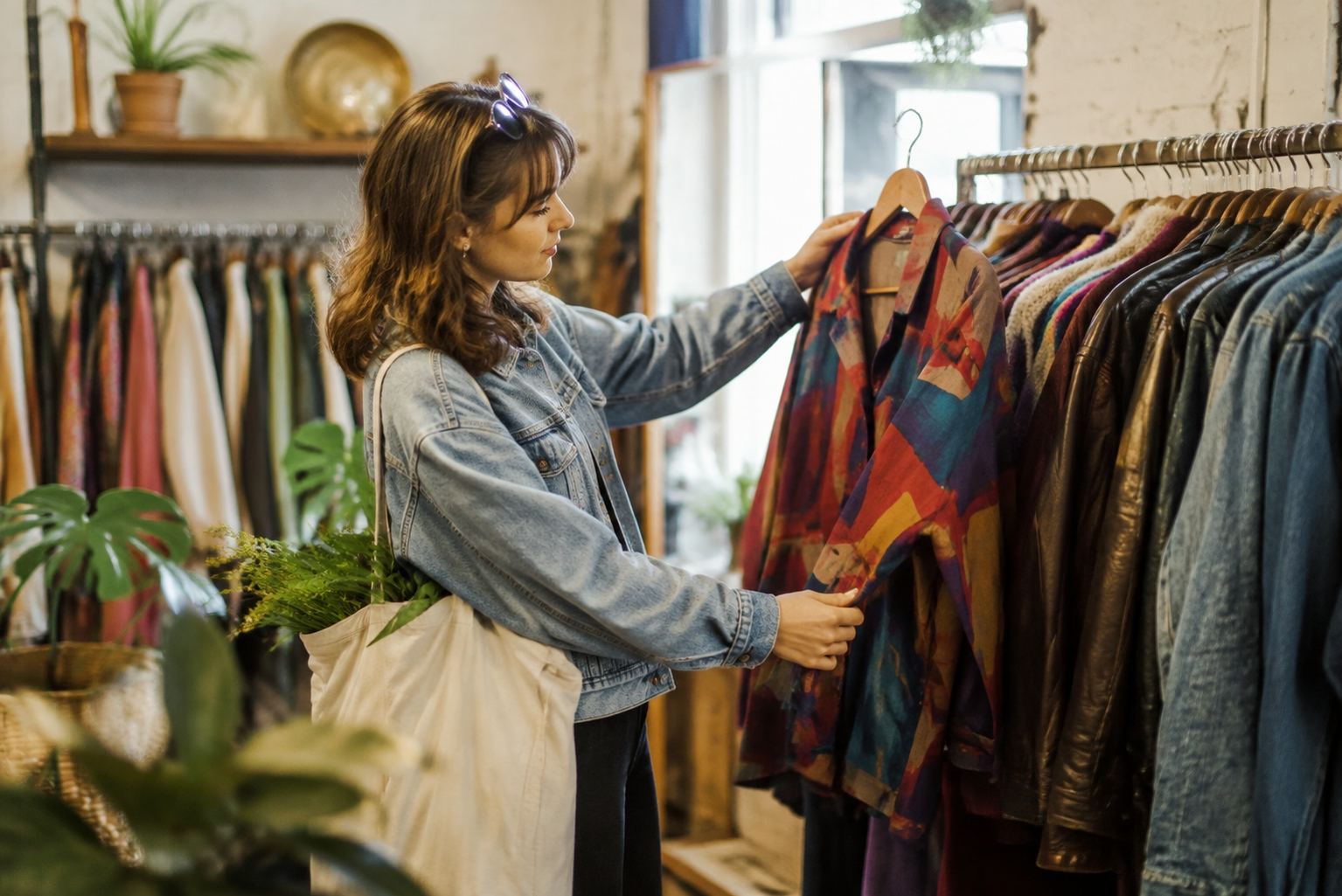
Australia’s fashion scene is increasingly focused on sustainability. Many Australians are making more conscious choices when it comes to the clothing they buy, favoring locally produced or eco-friendly materials. Sustainable fashion is gaining traction in both formal and casual categories, as consumers look for clothing that reflects their environmental values.
With more designers embracing eco-friendly practices, it’s easier than ever to incorporate sustainable clothing into your wardrobe, whether you’re dressing for a formal event or a casual outing. As sustainable fashion becomes a dominant trend, Australians are blending style and environmental responsibility to create wardrobes that are both chic and conscious.