
More Than a Seat at the Game
In Australian sport, membership has historically been a practical arrangement: you pay a fee, you get access to home games, and perhaps a scarf in the mail. That model is being dismantled and rebuilt in real time. The modern AFL or NRL membership is a year-round proposition, one that bundles exclusive content, priority merchandise access, voting rights, and digital perks designed to keep fans engaged from October through September. The financial logic is straightforward: a member who feels ownership in a club is a member who renews without hesitation, even in a losing season.
The Numbers Behind the Loyalty
The scale of Australian sports membership is impressive by any global standard. The AFL’s 1.4 million paid club members generate a baseline of predictable revenue that allows clubs to plan multi-year investments in facilities and playing lists . The NRL, while smaller in aggregate membership, has seen clubs like the Parramatta Eels reach 34,608 members and the Newcastle Knights surpass 32,000 . For individual clubs, membership revenue can be transformative. The Western Bulldogs’ A$10.84 million membership revenue in 2025 represented a fourth consecutive annual record, a figure that directly funds football department operations .
The Exclusive Merchandise Hook
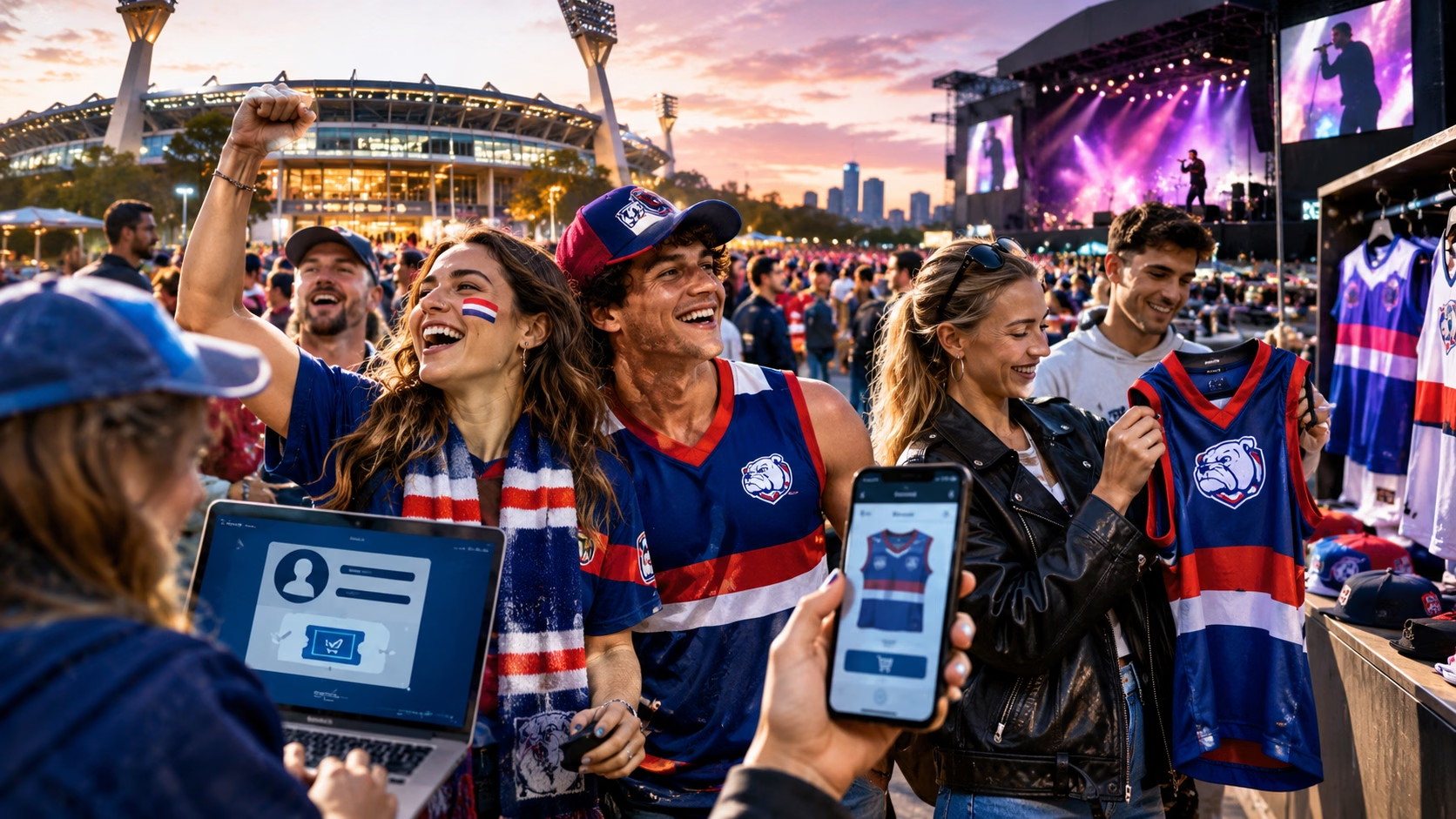
The most visible evolution in membership value is the merchandise privilege. Clubs have learned that a member who feels exclusive is a member who spends more. In 2026, this manifests in “member-only” merchandise windows: a commemorative Anzac Day guernsey released to members 48 hours before the public, or a limited-edition collaboration with a local streetwear brand available only to those who have held a membership for three consecutive years. The strategy leverages a basic psychological principle—scarcity plus belonging equals perceived value. And it works. Australian Sports Commission data shows that 17% of Australians bought or wore merchandise for a professional sports team in 2024/25, up from 14% in 2019/20 .
The Data Dividend
Every membership is also a data point. Clubs now track attendance patterns, merchandise purchase history, digital engagement, and even social media sentiment to build granular profiles of their fan base. This data informs everything from fixture scheduling to the design of next season’s alternate kit. The clubs that use this intelligence most effectively are able to segment their membership base into micro-communities—first-time members, lapsed renewals, die-hard away travelers—and tailor offers to each. A member who has attended every away game for five years might receive an exclusive travel package offer; a new member in an interstate market might get a digital-only membership tier with streaming perks.
The Risks of the Model
There is a tension inherent in the membership economy. As clubs add more tiers, more exclusive perks, and more digital content, the administrative cost of managing these programs rises. There is also the risk of alienating casual fans who feel priced out of full membership. The clubs navigating this best are those that maintain a low-cost entry tier—often digital-only—while reserving the premium experiences for the most invested. The goal is not to extract maximum revenue from every fan, but to create a ladder of engagement that fans can climb at their own pace. In a market where loyalty is increasingly contested by global sports properties and streaming entertainment, that ladder is the most valuable asset a club can build.