
A System Designed for Cities, Failing the Bush
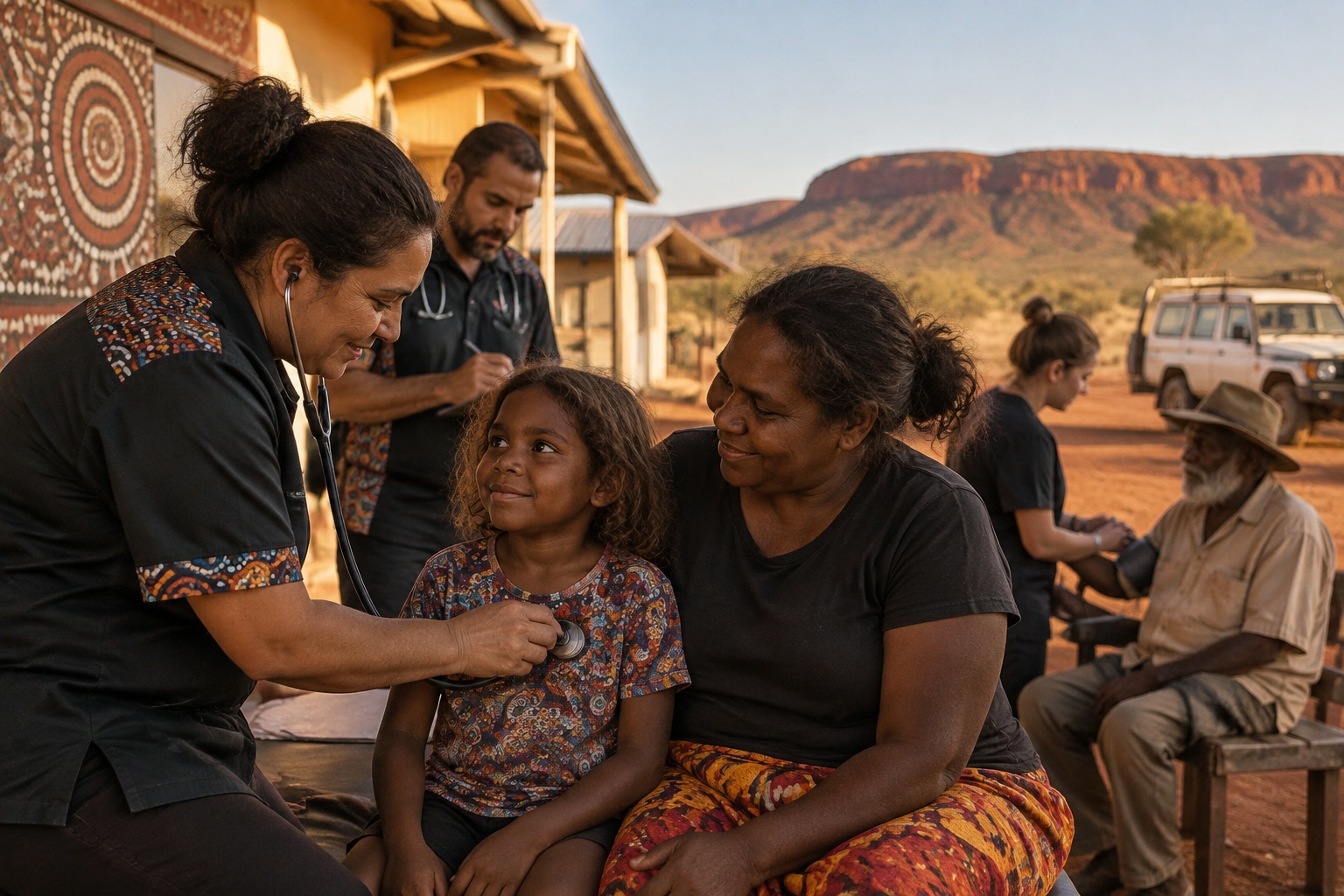
A Senate inquiry examining access to Medicare in rural areas has heard compelling evidence that Indigenous Australians in remote communities are being inadvertently penalised for their geographic location. Dr Jason Agostino, senior medical advisor at the National Aboriginal Community Controlled Health Organisation (NACCHO), told the inquiry that remote healthcare teams have built a leading model of care, yet Medicare only covers about a quarter of the cost of that work. The reason is simple but devastating: Medicare incentives largely focus on time with a general practitioner, not on a patient’s actual needs.
The consequences are stark. As a result of this funding mismatch, clinics staffed by doctors, allied health workers, nurses, and midwives receive around $900,000 less in Medicare and workforce incentives than a similar-sized standard GP clinic. In pockets of remote Australia, there are teenagers with type 2 diabetes, young patients on kidney dialysis, and people dying of heart disease before middle age. Despite the Aboriginal and Torres Strait Islander population being the youngest in the country, their burden of disease is more than double the national average.
The Fee-for-Service Trap
The current fee-for-service model rewards volume of GP consultations rather than comprehensive, team-based care. This is fundamentally incompatible with the needs of remote Indigenous communities, where complex chronic conditions require coordinated input from multiple health professionals. Many remote clinics rely on short-term funding to survive, with one service reportedly cobbling together 100 separate grants to keep operating. This precarious funding environment makes it nearly impossible to plan for the long term, recruit and retain staff, or expand services to meet growing demand.
Dr Agostino’s call to action was direct: “Fund the whole team, not just the doctor, and write the rules with us with a clear line of sight to closing the gap”. The organisations he represents provide about three million episodes of care across Australia each year, yet they operate under a system that was never designed with their model of care in mind.
The Human Cost of Geographic Disadvantage
The inquiry also heard about the higher transport costs associated with delivering healthcare in remote areas. Stephen Gourley, director of emergency medicine at Alice Springs Hospital, noted that Medicare funding does not cover the increased cost of transporting equipment, including basic supplies like cannulas. While the rollout of Medicare Urgent Care Clinics has been welcomed, Gourley observed that their opening hours do not address the reality that emergency departments face their highest demand after hours, particularly for domestic violence and acute injuries.
The federal health department’s submission to the inquiry acknowledged that primary care service delivery models operating in cities may not be viable in regional, rural, and remote Australia. This recognition is welcome, but recognition without structural reform changes little on the ground.
What Needs to Change
The solution requires a fundamental redesign of Medicare funding for rural and remote Indigenous health services. This means moving away from fee-for-service toward needs-based block funding that recognises the true cost of delivering comprehensive primary care in remote settings. It means investing in the full multidisciplinary team—not just GPs—and providing secure, long-term funding that allows Aboriginal Community Controlled Health Services to plan, recruit, and deliver care with confidence. Until these systemic barriers are dismantled, Indigenous Australians in remote communities will continue to die younger and suffer more than their urban counterparts, simply because of where they live.