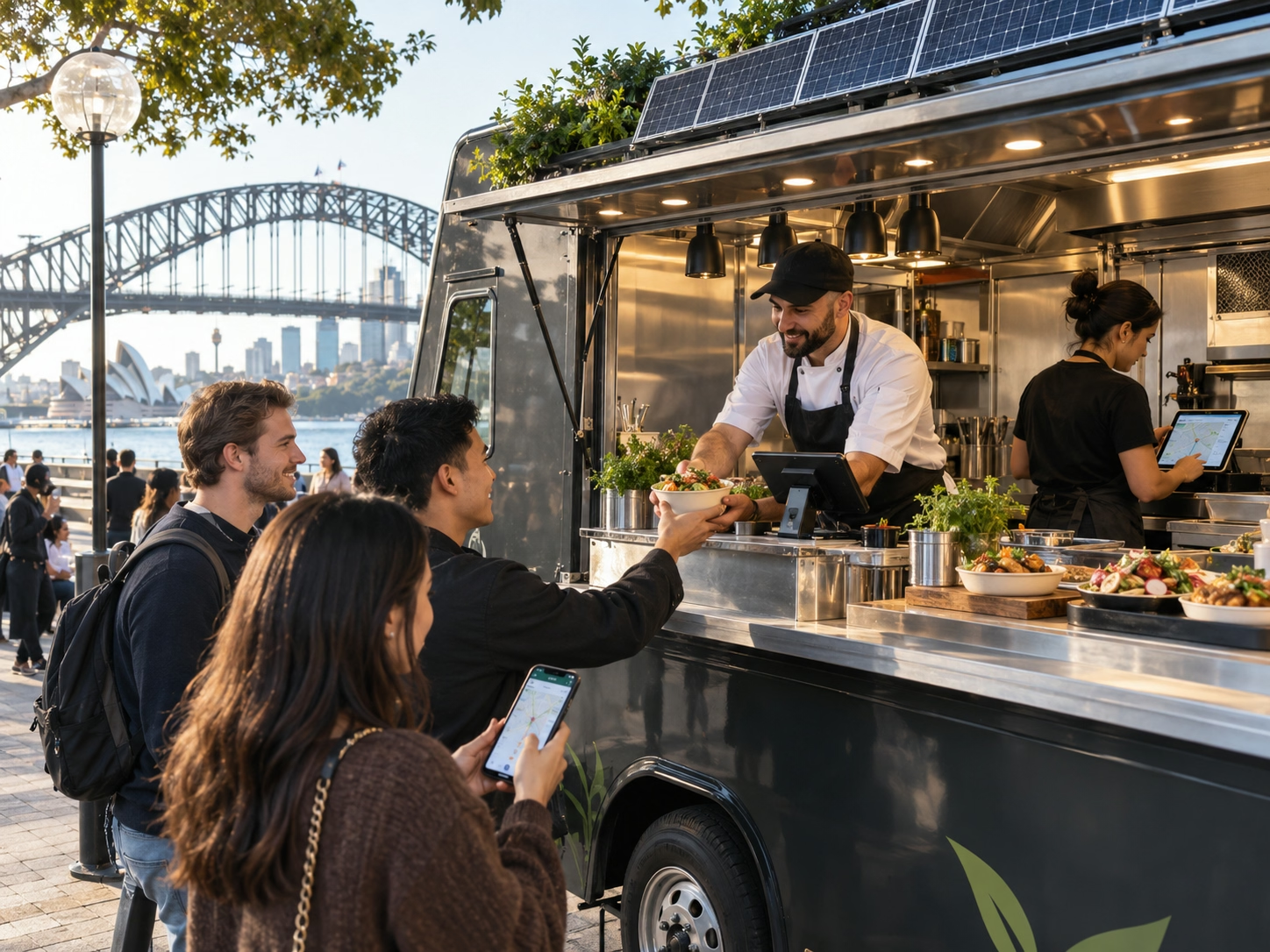
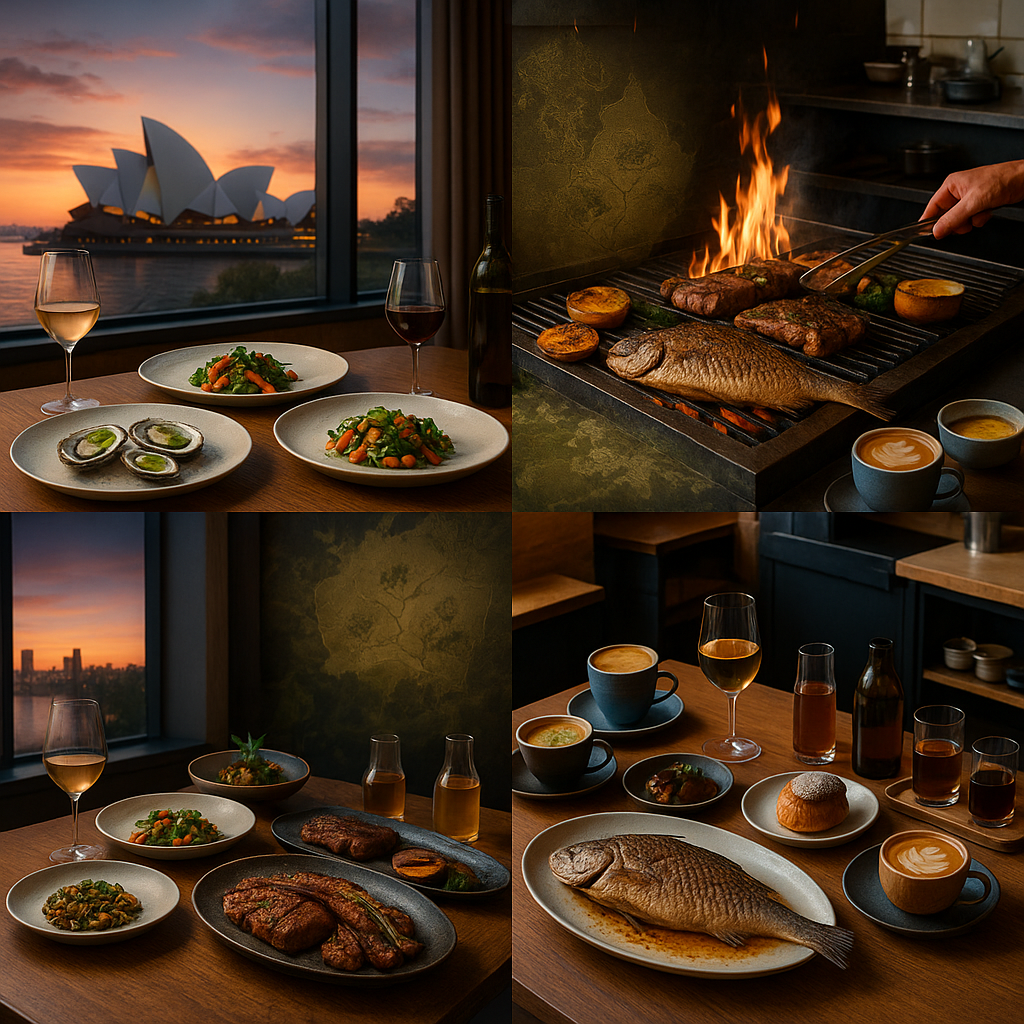
Start in Sydney, where harborside dining meets technique-driven kitchens. Quay frames the water with a tasting menu that prizes clarity and seasonality; textures are precise, flavors luminous. Bennelong, inside the Opera House, interprets Australian produce with flair—shellfish, grains, and native citrus often showing up in combinations that read as both familiar and new. Wood-fire mavens flock to Firedoor for a lesson in smoke and patience, while seafood obsessives book Saint Peter to understand how fish can be aged, cut, and prepared with the same reverence given to beef.
Melbourne trades views for detail. Attica has long championed native ingredients with narrative cooking that unspools across multiple courses, while Vue de Monde turns the city skyline into a theatrical backdrop for polished, contemporary plates. For a focused study in craft, Minamishima is often cited among the country’s finest omakase experiences, emphasizing balance, knife work, and rice mastery. Drive into regional Victoria for Brae, where the garden dictates tempo and the kitchen assembles a menu that hums with chlorophyll and quiet technique.
Queensland brings warmth and woodsmoke. In Brisbane, Restaurant Dan Arnold fuses French polish with tropical brightness—think precise saucing lifted by herbs and stone fruit. Agnes is a lodestar for live-fire cooking, drawing lines of flavor with char and ember while keeping dishes light enough for the climate. Travel south to the Gold Coast for Rick Shores, whose beach-edge setting and Asian-leaning plates—famous for a bug roll—capture the region’s relaxed energy without sacrificing refinement.
Across the continent, Perth’s Wildflower celebrates Western Australian produce while engaging with Indigenous seasonal frameworks; the room’s view and the menu’s subtlety align beautifully. Pasta devotees find a home at Lulu La Delizia, where regional Italian traditions are translated through local flour, seafood, and produce. In Tasmania, Fico and Templo in Hobart trade on intimacy and ingredient fidelity—menus are short, evolving, and quietly brilliant. Canberra’s Pilot brings playful course design and polished service to a neighborhood setting, reinforcing that top-tier cooking is not limited to capital-city landmarks.
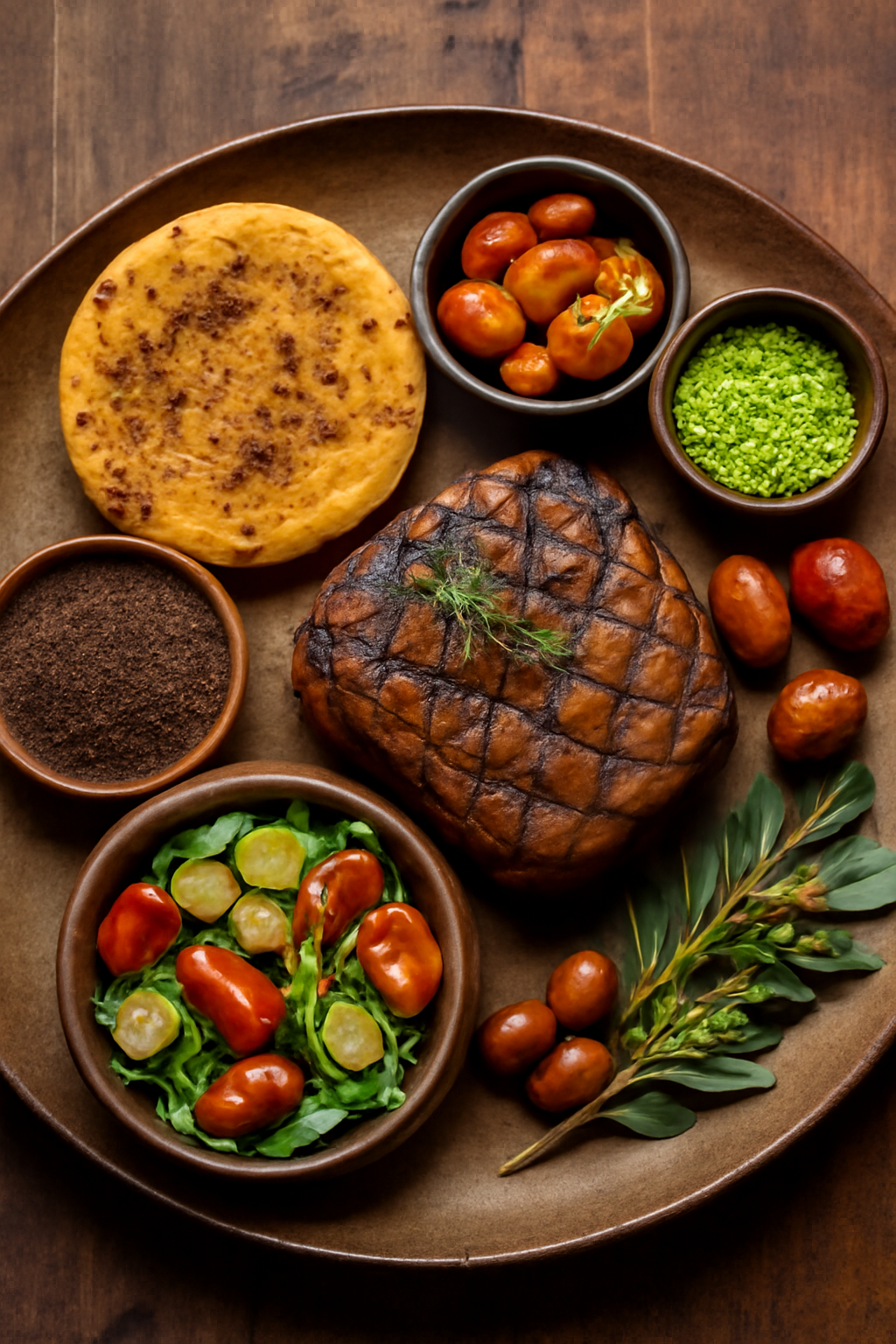
Cafés stitch the cities together. Start a Melbourne morning at Proud Mary or Seven Seeds, where filter flights, single origins, and careful milk texturing are standard. Sydney’s Single O and Reuben Hills lead on roasting and brew method variety. In Adelaide, Exchange Specialty Coffee is a barometer for thoughtful brunch cooking; in Perth, Mary Street Bakery pairs excellent coffee with viennoiserie and savory staples. Expect menus to include ferments, pickles, and native-inflected sweets like wattleseed brownies or lemon myrtle curd.
Logistics matter. Reservations for marquee spots can open weeks out; plan accordingly. Public holiday surcharges are normal. Tipping is considerate rather than compulsory, and BYO is still alive in smaller venues—corkage posted or easily confirmed. Wine lists favor Australian regions: Margaret River, Barossa, Yarra Valley, and Tasmania loom large, as do minimal-intervention bottles with lift and texture. If you chase a sense of place—from ocean salinity to bushland aromatics—you’ll eat extraordinarily well in every city on this itinerary.