
A Landmark Law Meets a Structural Problem
On 1 January 2026, Australia’s streaming landscape changed. Platforms with more than one million local subscribers—including Netflix, Disney+, Prime Video, Apple TV+, Stan, Binge and Paramount+—became subject to mandatory local content investment obligations. Under the new rules, these services must allocate at least 10% of their total programme expenditure for Australia, or 7.5% of their local revenue, to new Australian drama, children’s, documentary, arts and educational programming.
The legislation represents the most significant intervention into Australian screen financing in a generation. But a central question remains unanswered: will more Australian content actually be found by Australian audiences?
The Investment–Discovery Disconnect
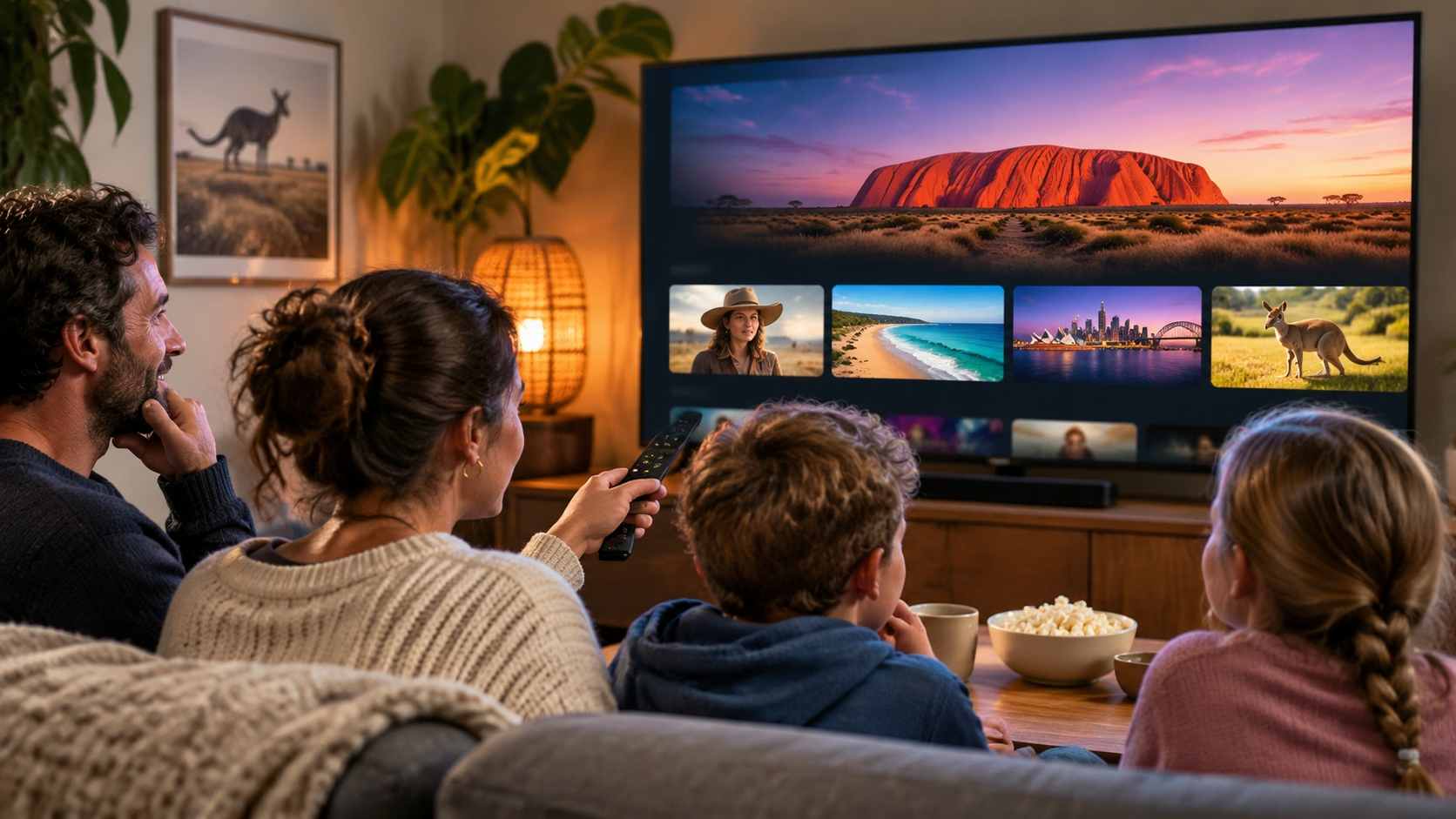
The Screen Currency 2026 data reveals a market in which local content is valued but not visible. While 84% of Australians consider access to local screen content important and 75% want to watch more, 60% spend less than 30% of their viewing time on it, and only 36% find it easy to locate. These figures describe a discovery failure that production quotas do not directly address.
Screen Producers Australia has been explicit about the distinction. “Making Australian content available somewhere within a streaming catalogue is not the same as making it visible to Australian audiences,” CEO Matthew Deaner said. A platform can satisfy its expenditure obligation by commissioning a handful of high-budget titles and still leave those titles difficult to find on its interface.
Three-Year Aggregation and the Risk of Feast-or-Famine
The regulatory design includes a three-year acquittal mechanism, allowing platforms to aggregate their local content spending across a multi-year cycle rather than meeting annual targets. Industry figures have warned that this flexibility could produce uneven outcomes. “They can aggregate it over three years, so they could spend on one programme, three years worth of energy,” Deaner noted. “That can be very destabilising for a sector”.
A platform could, in theory, concentrate its entire three-year obligation on a single prestige production, creating a burst of investment followed by a drought. For the independent production sector—where businesses depend on a steady pipeline of commissions to retain creative talent and crew—this volatility is a structural risk. It also does little to ensure a consistent, discoverable presence of Australian content across platform interfaces over time.
What the Legislation Does Not Mandate
The new obligations target production expenditure, not prominence. There is no statutory requirement for platforms to feature Australian content on homepages, in recommendation carousels, or in search results. The Australian Communications and Media Authority (ACMA) will monitor compliance with investment thresholds, but the legislation does not prescribe how local titles should be surfaced to audiences.
This is not an oversight in the drafting; it reflects the political and commercial sensitivity of mandating interface design. Platforms argue that editorial and algorithmic curation is a core part of their product and that prescriptive prominence rules would distort the user experience. Critics counter that a platform benefiting from Australian subscribers and Australian content investment has a corresponding responsibility to make that content findable.
The $50 Million ABC Boost and the Public Service Alternative
Alongside the streaming obligations, the government allocated A$50 million over three years from 2026–27 to the ABC to support new Australian children’s and drama content. The ABC remains the largest commissioner of Australian scripted content, and the funding boost is intended to ensure a free-to-air pipeline of local drama that does not depend on subscription willingness-to-pay.
The ABC’s role is significant in the discoverability context. Screen Currency 2026 found that when audiences were asked where they would go to find Australian content, they gravitated towards the ABC or YouTube rather than commercial streamers. A well-funded public broadcaster with a clear local identity offers a discovery pathway that algorithm-driven global platforms do not naturally provide.
The Four-Year Review and the Next Policy Frontier
A statutory review of the streaming framework is scheduled after four years. That review will be the next opportunity to assess whether investment obligations have translated into audience outcomes—not just production volume. The Screen Currency 2026 report makes the case that discoverability is now as important as production. If the review finds that spending has risen while visibility has not, the policy conversation will inevitably turn to prominence measures.
For now, Australia has a production policy. Whether it becomes a discovery policy depends on what happens after the cameras stop rolling and the titles enter the catalogue.