The Digital Atelier
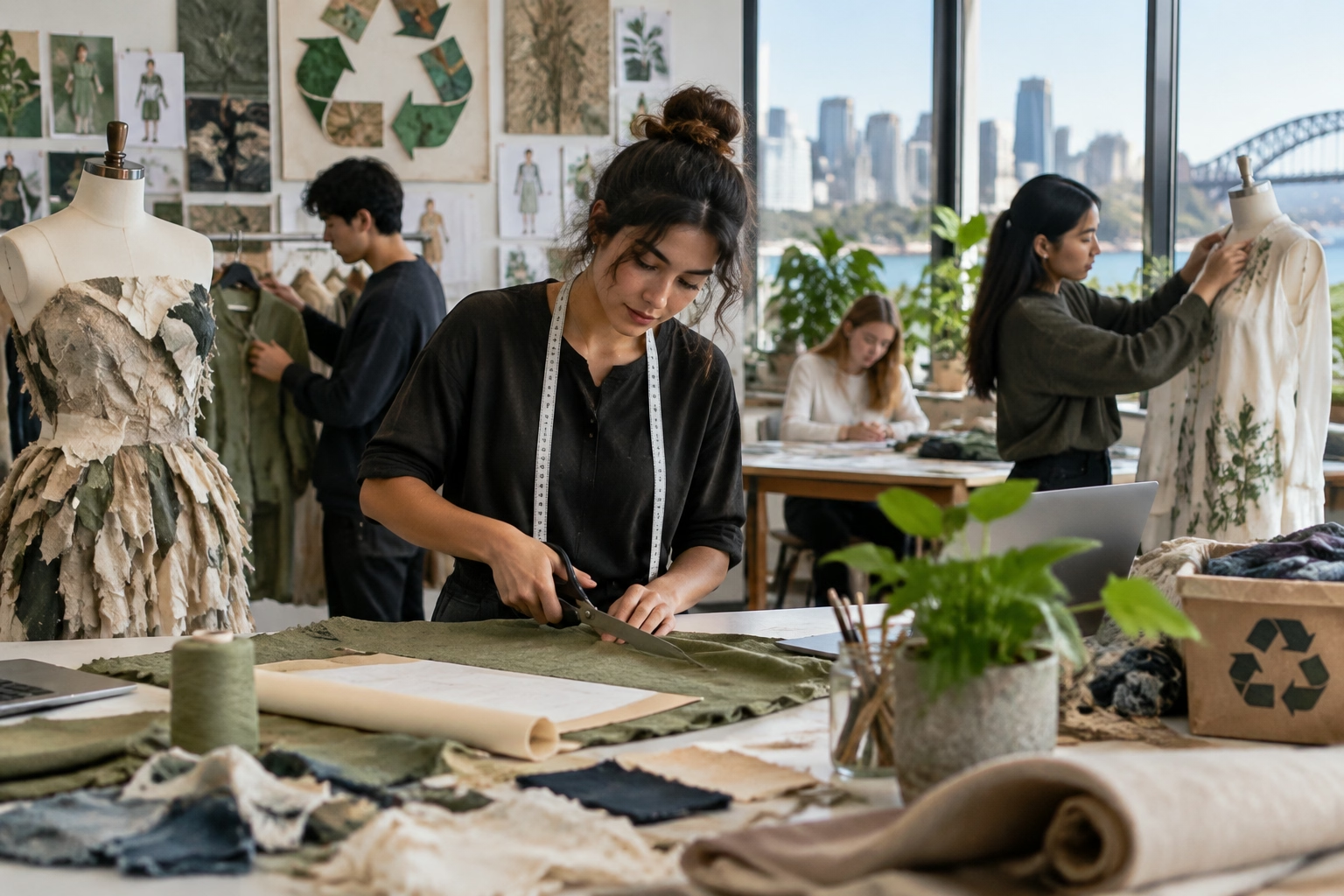
The image of the fashion designer as a solitary artist working with scissors and fabric is rapidly becoming obsolete. In 2026, the most sought-after fashion graduates are those who can move fluidly between the physical and digital worlds — sketching by hand in the morning and building 3D garment simulations by afternoon.
Australian fashion schools have responded by embedding advanced technologies into every level of their curricula, from foundational diplomas to honours degrees. The goal is not to replace traditional craftsmanship, but to augment it with tools that make designers faster, more precise, and more sustainable.
RMIT and the Fusion of Enterprise and Technology
RMIT University’s Bachelor of Fashion Enterprise and Technology (Honours) exemplifies this convergence. The program covers fashion entrepreneurship, fabric-to-fashion innovation studios, e-commerce for fashion, fashion forecasting and analytics, advanced textile materials, global fashion supply chains, and circular fashion design thinking.
This is a curriculum designed for the realities of modern fashion commerce. Students learn to use data analytics to predict trends, to leverage e-commerce platforms to reach global customers, and to apply circular design principles to every stage of the product lifecycle. The inclusion of an industry placement project ensures that these digital skills are tested in real commercial environments.
UTS and the Advanced Fashion Technologies Studio
The University of Technology Sydney has integrated technology throughout its Bachelor of Design in Fashion and Textiles. The curriculum includes dedicated subjects in Advanced Fashion Technologies, Digital Fashion Design Programs, and Textiles: Digital and Screen Print Design.
Students learn to use industry-standard software including Adobe Illustrator and Photoshop for fashion illustration, alongside digital tools for flat patternmaking and garment construction. The university’s Global Studio elective further allows students to apply these digital skills in an international context, collaborating with peers and industry mentors across different markets.
The TAFE Sector and Applied Technology Training
Australia’s vocational education sector has also embraced the technology shift. TAFE institutions across the country now offer Certificate III and IV programs in Apparel, Fashion and Textiles that include training in computer-aided pattern design (CAPD), digital textile printing, and automated garment construction techniques.
These programs serve a critical function in the industry ecosystem. While university degrees produce design leaders and creative directors, TAFE qualifications produce the skilled technicians and production specialists who translate design concepts into commercially viable products. The National Manufacturing Strategy explicitly identifies accelerating advanced manufacturing as a strategic pillar, requiring a workforce trained in modern machinery and new technologies.
Preparing for an AI-Augmented Industry
The integration of artificial intelligence into fashion design tools is accelerating rapidly. AI-powered trend forecasting, automated pattern generation, and virtual fitting technologies are already being used by major Australian brands. The fashion schools that will produce the most successful graduates are those that treat these tools not as novelties, but as essential competencies.
This technological transformation is not without its challenges. The National Manufacturing Strategy notes that the median age of Australian textile manufacturers is 57, indicating a significant skills gap that must be bridged through education and training. Fashion schools are uniquely positioned to bridge this gap by producing graduates who are fluent in both traditional craft and modern technology.
The Designer as Technologist
The graduates emerging from Australian fashion schools in 2026 are not simply designers who happen to use computers. They are hybrid professionals who understand the entire digital product lifecycle — from initial concept sketch to 3D prototype to digital marketing campaign to end-of-life recycling.
This technological fluency is what distinguishes Australian fashion graduates in an increasingly competitive global market. They enter the industry not as entry-level creatives waiting for direction, but as professionals equipped to lead digital transformation within established brands or to build technology-enabled fashion businesses from the ground up.