From Niche Interest to Economic Engine
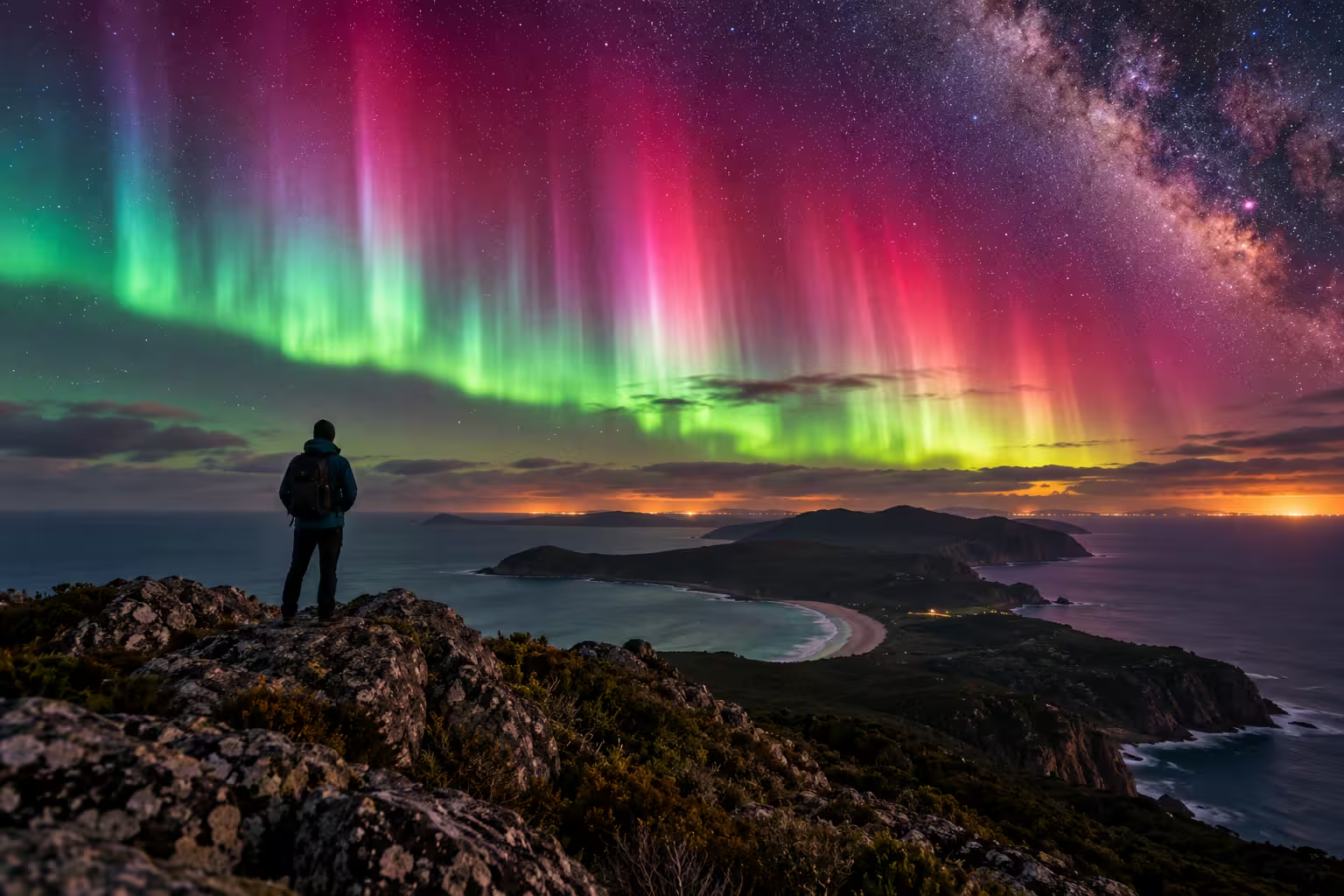
When the Mallanganee Observatory-Lookout opened on the crest of the Richmond Range in April 2026, it represented more than a new tourist attraction. The $3.33 million facility — funded through a $2.067 million NSW Government investment and $1.267 million from Kyogle Council — was explicitly positioned as an economic development tool.
“The economic ripple effect will be felt by every small business from Mallanganee to Tenterfield,” declared the local member of parliament at the opening. “We are transforming this unique natural asset into a reliable economic engine — one that drives year-round foot traffic and sustains permanent local employment for years to come”.
This language reflects a broader recognition across Australia: darkness has become a marketable asset.
The Data Behind the Boom
The numbers support the optimism. A Booking.com survey across 33 countries found that 62% of respondents were considering holidays featuring night-based experiences. Luxury tour operator Wayfairer Travel reported that nocturnal excursions grew 25% in 2024, with the market anticipated to double by 2035.
In Australia specifically, Google Trends data reveals sustained growth in stargazing-related searches. Interest in “dark sky” across NSW has roughly doubled since 2022, with peaks reaching the 90s by 2026. Destination NSW has actively branded the state as “Australia’s astro-tourism capital,” citing Warrumbungle National Park as proof of concept.
The Camping Connection
The caravan and camping sector has emerged as a key beneficiary. Australians took 17.3 million caravan and camping trips in 2025, with 87% of those trips directed to regional areas. Hipcamp’s integration of NASA’s 2026 Black Marble satellite imagery into its search platform now allows campers to filter campsites by night sky quality, connecting dark sky demand directly with regional accommodation supply.
Indigenous Economic Participation
Dark sky tourism also creates opportunities for Indigenous economic participation. At Karlu Karlu, the International Dark Sky Sanctuary designation includes plans for Aboriginal-led night sky storytelling as part of the visitor experience. This model ensures that Traditional Owners benefit economically from tourism while maintaining cultural authority over interpretation.
Similarly, experiences like the Sky Country Tours at Healesville Sanctuary, led by Gomeroi astrophysicist Krystal De Napoli, demonstrate how Indigenous astronomical knowledge can be integrated into commercial tourism offerings.
The Infrastructure Question
The economic potential of dark sky tourism depends on infrastructure. The Mallanganee project included not just the observatory itself but also a new amenities block, road upgrades, and internal pathways — recognizing that visitor access is a prerequisite for economic benefit.
The River Murray Dark Sky Reserve is set to expand with a new planetarium and observatory, signaling continued public and private investment in the sector. These investments suggest that dark sky tourism is transitioning from a novelty to a foundational component of regional tourism strategies.
A Sustainable Model
What distinguishes dark sky tourism from many other forms of nature-based tourism is its inherently low-impact nature. The product is darkness itself — a resource that requires no extraction, no construction, and no consumable inputs. Protecting it aligns with broader environmental goals, including nocturnal wildlife conservation and energy reduction.
For remote communities seeking sustainable economic development, the night sky may prove to be one of the most valuable natural assets they possess.