Australia has a food history that stretches back thousands of generations, yet many of its oldest ingredients remain unfamiliar to the wider public. Before European settlement, Aboriginal and Torres Strait Islander peoples built complex food systems based on local plants, animals, water sources, and seasonal cycles. These traditions were never erased from Indigenous life, but they were often neglected in national food culture. Today, the renewed interest in native Australian ingredients is helping revive ancient recipes and restore respect for traditional knowledge.
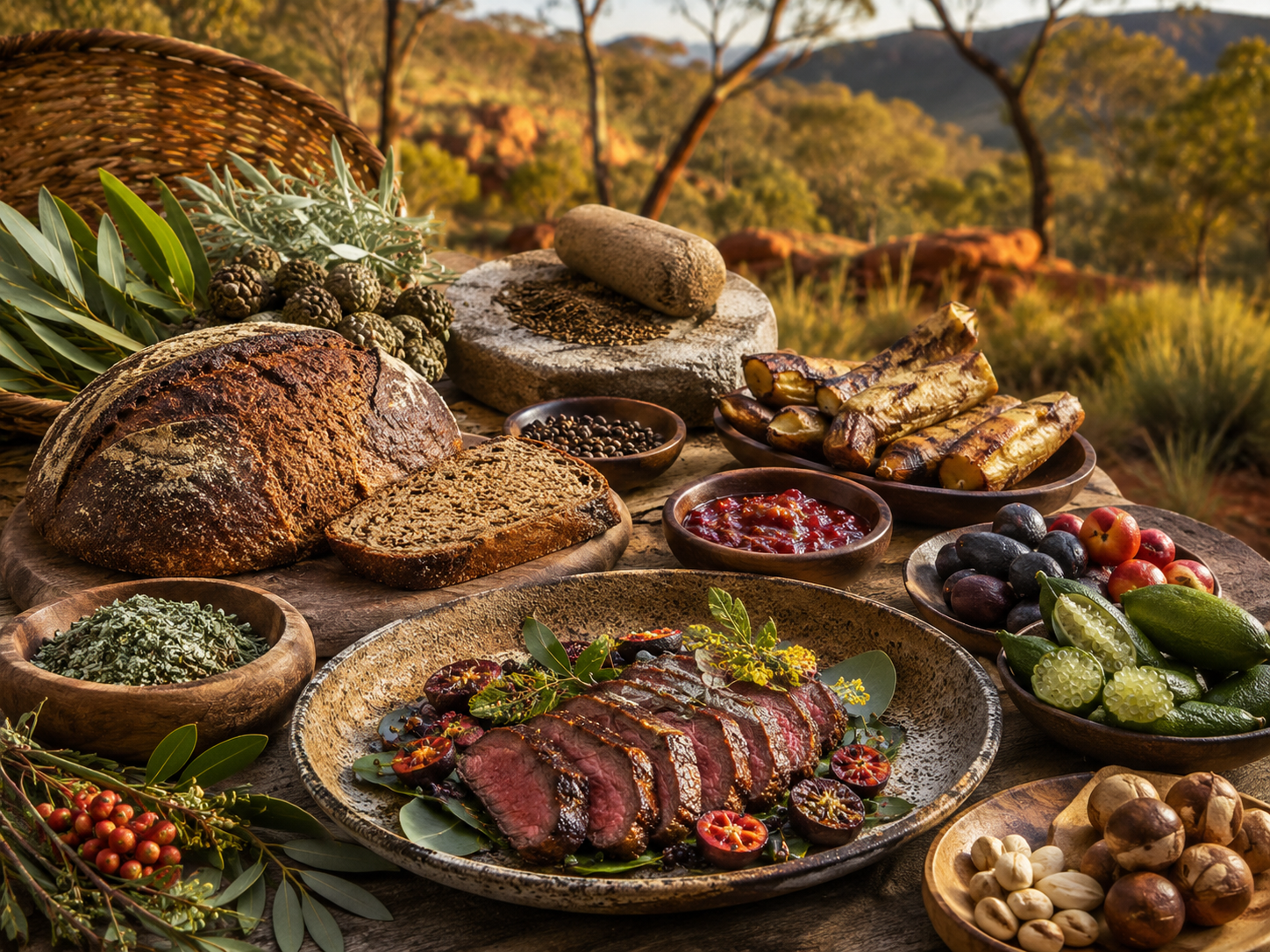
A central feature of this cuisine is its strong connection to place. Different regions offered different foods, and communities understood when and how to harvest them. Wattleseed was collected from certain acacia trees, roasted, and ground into a flour-like powder. It could be used to make bread-style foods cooked on hot stones or in ashes. Because roasted wattleseed tastes slightly like hazelnut, chocolate, and coffee, modern cooks now use it in cakes, pastries, drinks, and sauces.
Root vegetables were also essential. Murnong, or yam daisy, was once a major food in parts of south-eastern Australia. Its tubers could be roasted, steamed, or baked, providing energy and sweetness. Other underground foods, including native yams and lilies, were gathered with detailed knowledge of growth cycles so the plants could continue producing. This kind of harvesting reflected sustainability long before the word became common.
Native fruits brought sharp, sweet, and sour flavours to traditional meals. Quandong was eaten fresh or dried for later use. Kakadu plum provided intense sourness and powerful nutrition. Finger lime added bursts of citrus flavour, while bush tomato contributed a rich, savoury taste after careful preparation. Herbs such as lemon myrtle and native mint helped season food, and saltbush leaves added natural saltiness.
Ancient recipes were often based on fire and patience. Fish, shellfish, kangaroo, emu, and other proteins were roasted, smoked, or cooked in pits. Bunya nuts were roasted or ground into meal. Seeds were crushed with grinding stones and mixed with water to make dough. In some places, people used sophisticated fish traps and eel systems, proving that food gathering involved engineering, planning, and deep ecological understanding.
Bringing these recipes into modern cooking can be both exciting and meaningful. A simple wattleseed damper can introduce people to native grains and seeds. Kangaroo fillets with pepperberry show how traditional ingredients can create bold flavour. Roasted root vegetables with saltbush can highlight ancient plant foods. Quandong sauces can be served with desserts or meats, while lemon myrtle can brighten soups, teas, and baked goods.
Still, it is important not to treat native ingredients as fashionable novelties. They are part of living Indigenous cultures and should be approached with respect. Ethical revival means recognising the people who protected this knowledge, supporting Indigenous growers and businesses, and avoiding the idea that these foods were “discovered” only when restaurants began using them.
Reviving ancient Australian food is a way to reconnect with land, culture, and history. It reminds us that Australia’s oldest cuisine is not lost; it has been waiting for wider recognition.