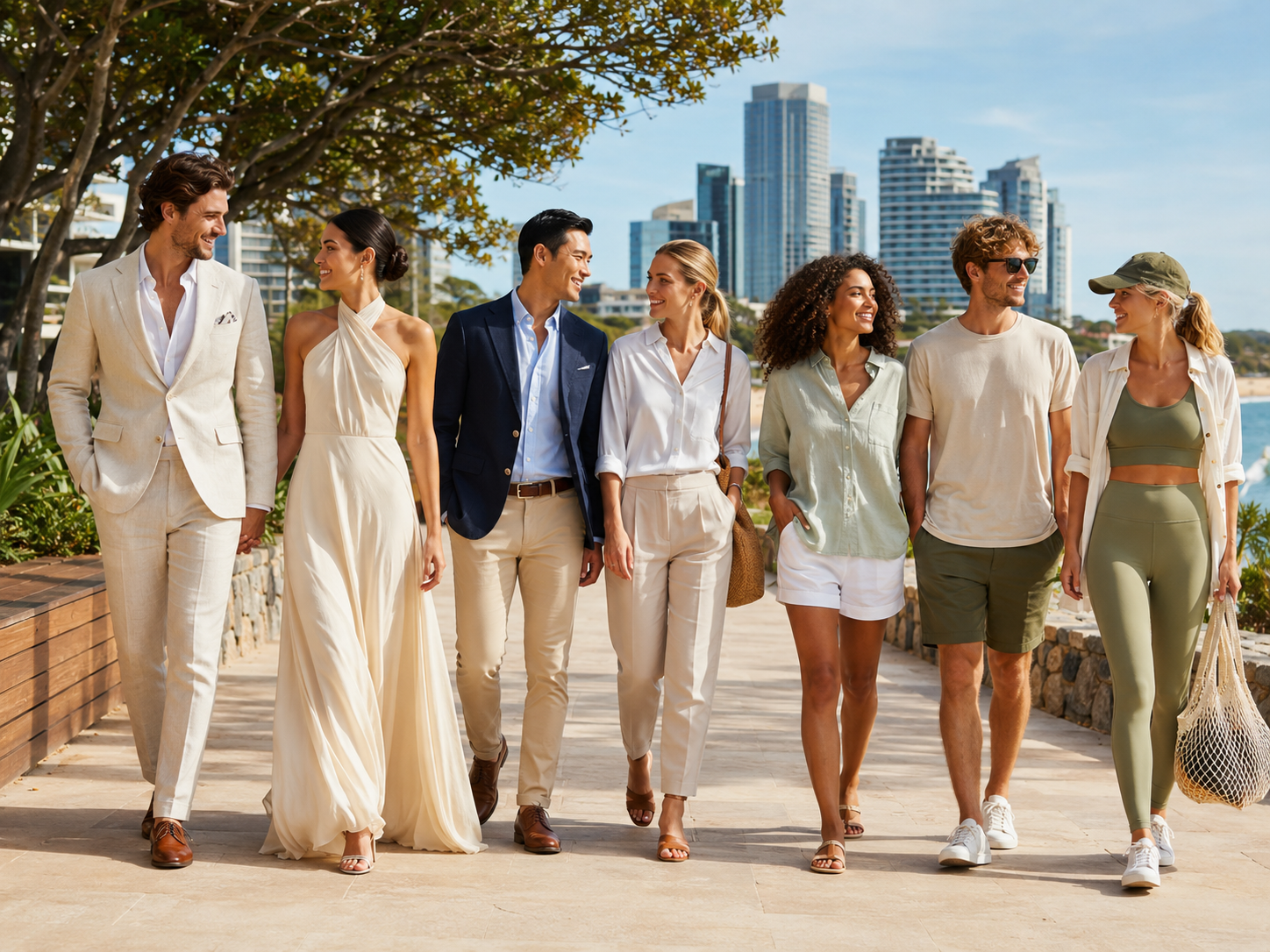
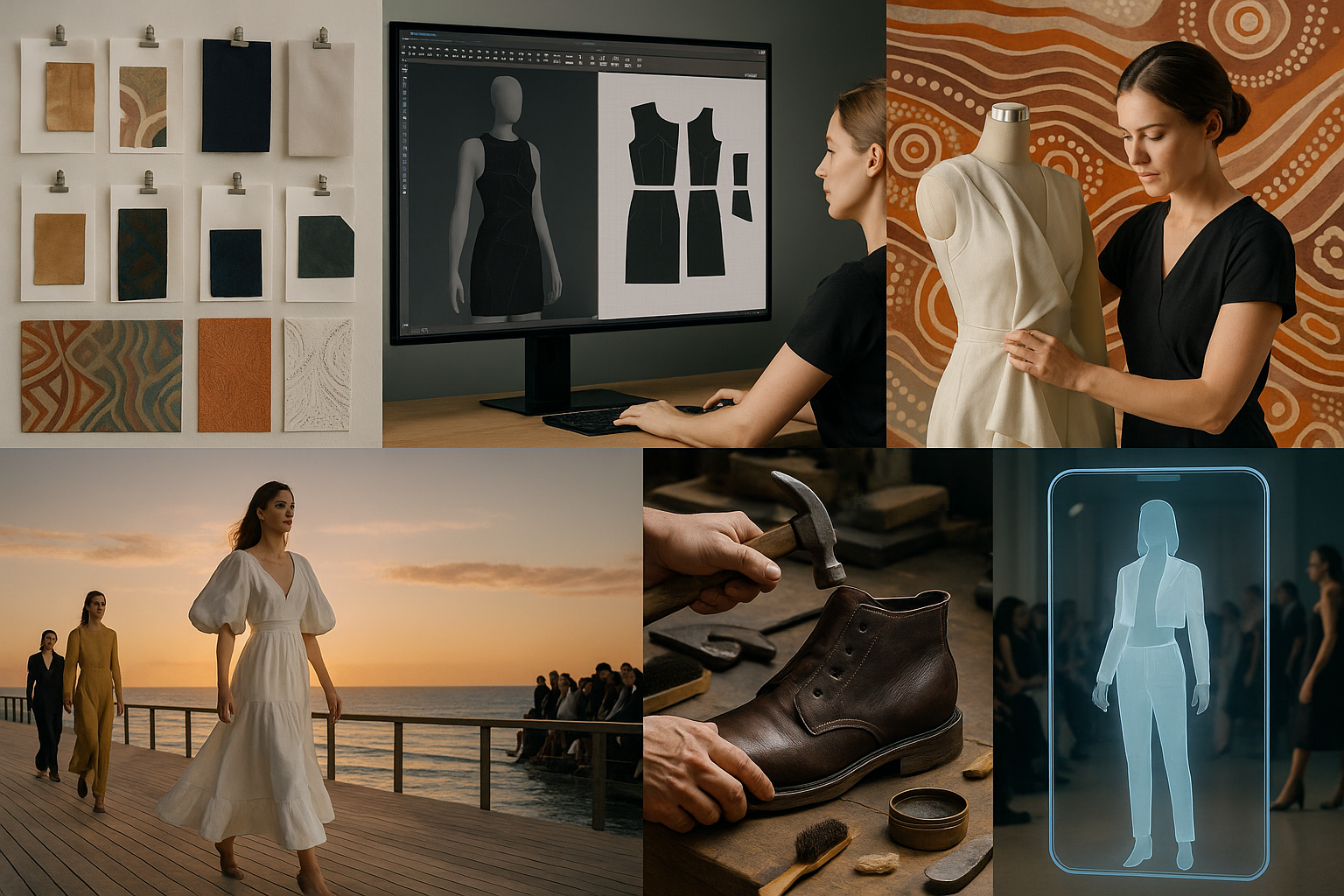
Australia’s geography—vast skies, coastal brightness, and urban edges—has seeded a distinct fashion vocabulary that now resonates worldwide. Designers translate this environment into forms, fabrics, and attitudes that read as both relaxed and refined.
Zimmermann distilled the idea of resort living into couture-adjacent daywear. Through painterly prints, lace trims, and buoyant proportions, the label elevates the sundress to a statement piece. Yet the clothes remain pragmatic: light, packable, and wearable outside of tropical settings, which is key to global adoption.
Dion Lee leans into architecture. Technical knits, engineered cut-outs, and corsetry reframed for modern dressing evoke the geometry of cityscapes. Lee’s tailoring often pivots on negative space—panels that open and re-close, seams that map the body like scaffolding—resulting in silhouettes that are daring yet structurally sound.
Toni Maticevski pushes sculpture to the red carpet, using bonded fabrics and meticulous draping to produce fluid armor. His gowns emanate movement even when still, merging athleticism with high glamour. Alex Perry, by contrast, sharpens the cocktail wardrobe with precision-fit dresses that celebrate posture and polish, becoming stylists’ go-tos for camera-ready impact.
Akira Isogawa’s language is more meditative: hand-worked textiles, layered sheers, and Japanese-influenced craftsmanship. By privileging touch—gauze, organza, crepe—he reveals an Australian openness to cultural fusion that is respectful rather than derivative. Kym Ellery brought a sculptural minimalism that softened hard lines with fluted sleeves and controlled volume, a reminder that restraint can be dramatic.
The country’s street-to-luxury pipeline is robust. Sass & bide fanned out from denim and embellishment into cosmopolitan separates, while Romance Was Born forged an art-fashion hybrid, collaborating with contemporary artists to create immersive show worlds and collectible garments. These partnerships became a hallmark: Australian designers often work across disciplines—art, music, film—building communities around their labels.
Sustainability weaves through aesthetics rather than sitting apart. Bassike’s considered basics mirror the clarity of the landscape; KitX’s material choices put ethics into tactile form. Indigenous designers center story and Country, where prints and palettes are more than decoration—they are maps of identity, seasons, and kinship. This layered meaning sets Australian fashion apart in a market crowded with surface-level trend.
Retail strategy mirrors lifestyle realities: capsule wardrobes designed for heat, travel, and flexible work cultures. The clothes transition from beach to gallery opening, from weekday uniform to weekend escape. It’s a design intelligence built on mobility and climate, now appealing to global consumers navigating similar shifts.
The Australian aesthetic succeeds because it balances ease with intent. Clothes are engineered to be lived in: breathable, repairable, modular. Yet they photograph beautifully and withstand scrutiny in luxury contexts. That duality—grounded yet aspirational—has ensured that Australia’s coastal-to-catwalk story keeps echoing far beyond its shores.