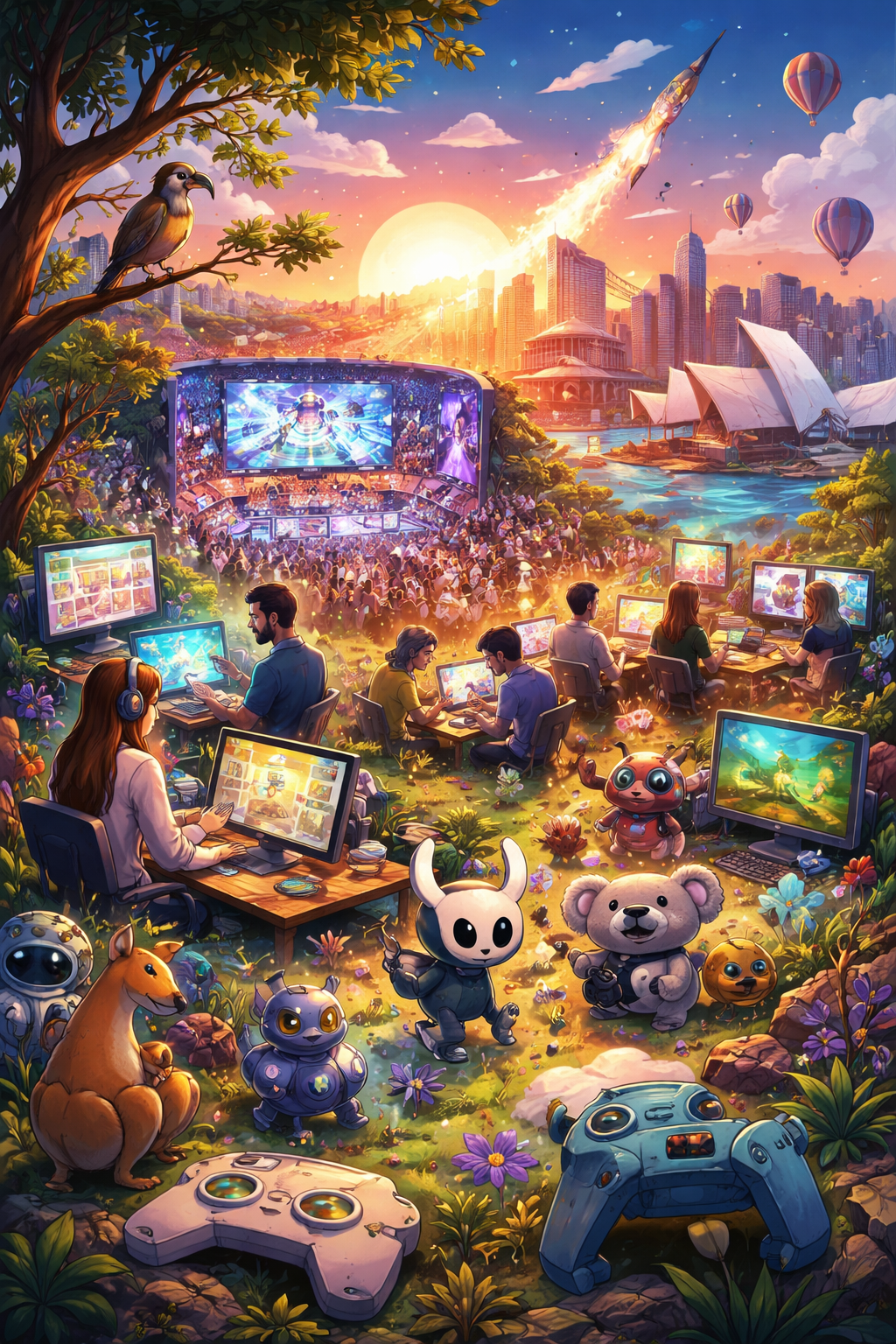
The Australian video game industry has matured into a layered ecosystem combining creativity, technology, and community. Its development story is less about a single boom and more about gradual infrastructure building: skills pipelines, studio networks, funding mechanisms, and a public audience that increasingly treats games as a mainstream entertainment pillar.
Historical trajectory: constraints to autonomy
For years, Australian teams faced structural limits. Physical distribution, publisher gatekeeping, and the high cost of console development made it difficult for small studios to survive on original projects alone. Many pivoted to work-for-hire, while others closed during global downturns. As engines became cheaper and digital stores expanded, developers gained autonomy. A small team could now ship internationally, patch quickly, and build a community without relying entirely on traditional publishing.
Cluster growth and professionalization
Major cities developed recognizable clusters supported by meetups, conferences, incubators, and shared talent pools. The industry professionalized: producers, QA specialists, UI/UX designers, narrative designers, and community managers became standard roles rather than luxuries. This matters because sustainable studios require more than programming and art—they need marketing strategy, analytics literacy, live-ops planning, and legal/IP awareness.
Business models powering the sector
Australian studios increasingly mix revenue strategies:
- Premium releases (one-time purchase) with downloadable expansions
- Live service updates that extend engagement over months or years
- Mobile monetization models with careful balancing to maintain player trust
- Co-development contracts that bring steady cashflow and cross-border experience
This business diversity supports resilience. It also shapes the kind of entertainment produced: some titles are crafted as compact narrative experiences, while others are designed as long-term hobbies with evolving content.
Public investment and training pathways
Games have gained legitimacy within cultural funding frameworks. State programs have offered grants and project support, while federal policy has moved toward tax incentives aimed at encouraging local production. Education has also expanded: universities and vocational institutions teach engine skills, game design theory, interactive storytelling, and production workflows. Combined with community learning—game jams, mentorship, and online portfolios—these pathways lower entry barriers and broaden participation.
Entertainment impact: interactivity as a default
Australia’s entertainment landscape now assumes interactivity. Games compete for the same leisure hours once dominated by television, cinema, and music, but they also blend with them. Players listen to podcasts while grinding levels, watch streamers for comfort viewing, and treat esports events as social spectacles. Games aren’t simply “content”; they are systems that generate stories through play, enabling personalization that passive media can’t easily replicate.
Social, cultural, and creative influence
Video games have become social infrastructure: friends gather in co-op worlds; communities form around speedrunning, modding, and roleplay; and local events provide real-world connection. Australian-made titles add cultural texture by presenting distinct art direction and humor, and by exploring themes that reflect regional identity. There is also growing interest in projects that respectfully engage with Indigenous perspectives, though that work requires careful collaboration and community-led approaches.
Pressure points and what comes next
Despite progress, the industry still navigates capital constraints, market discoverability, and intense global competition. Studio health depends on realistic scopes, fair labor practices, and strong publishing or marketing partnerships. Emerging tech—cloud streaming, VR/AR, and AI-assisted workflows—may reduce some costs while introducing new ethical and creative challenges.
Australia’s industry appears best positioned when it pairs disciplined production with daring ideas, turning local talent into interactive entertainment that resonates far beyond its shores.