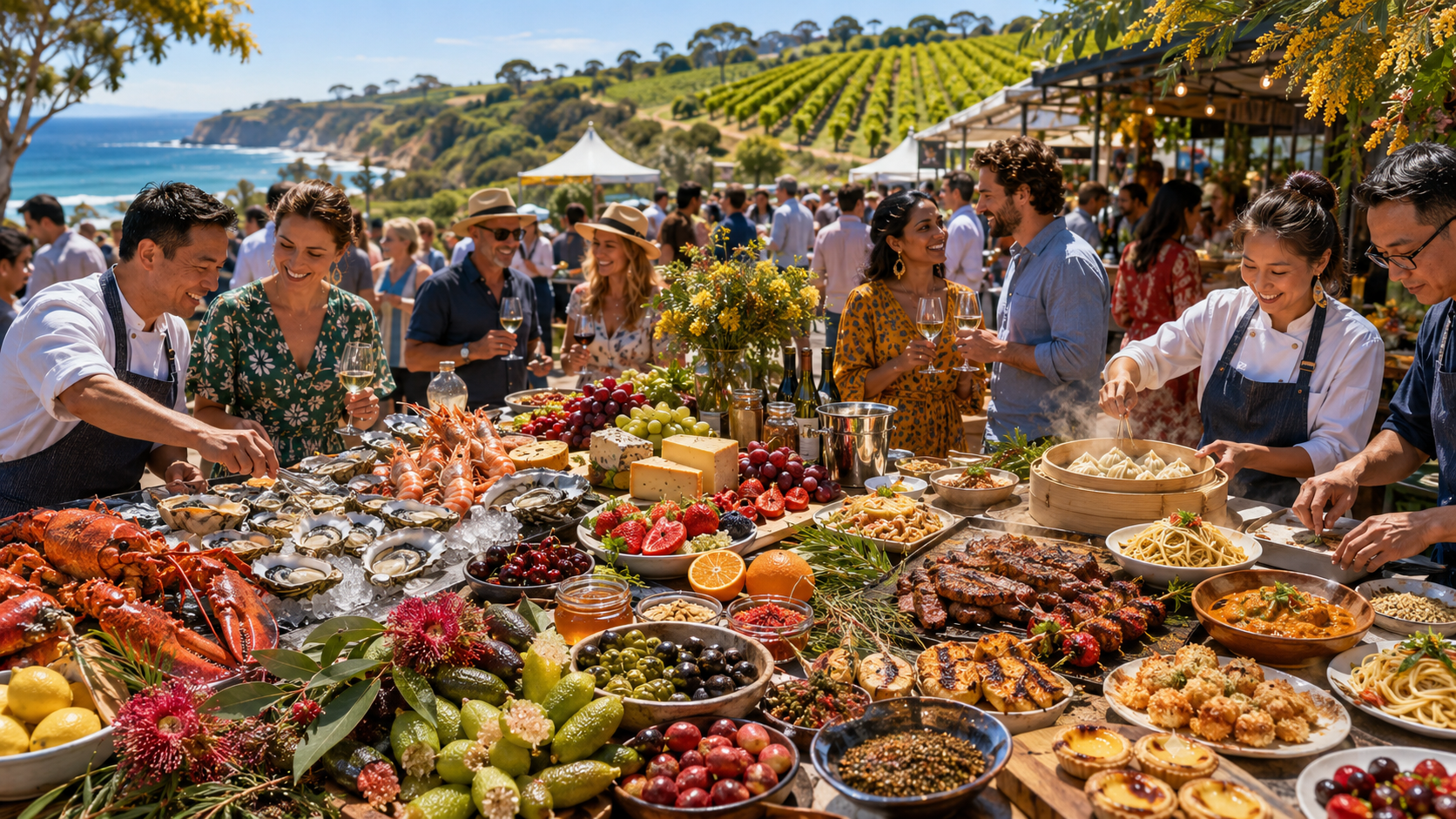
Australia’s food festivals are lively showcases of the nation’s culinary depth. They bring together regional produce, international flavors, native ingredients, and community traditions in a way that reflects the country’s broad identity. From seaside seafood events to wine-country feasts and multicultural street-food celebrations, these festivals help define what Australian cuisine means today.
A key feature of food festivals in Australia is their strong regional character. Each part of the country has ingredients and specialties shaped by climate, landscape, and local industry. Coastal regions often focus on seafood because fishing and aquaculture are central to their economies. At these festivals, visitors can taste oysters, grilled prawns, fresh fish, crab dishes, lobster rolls, and seafood chowder. Cooking demonstrations frequently show how chefs use local herbs, citrus, butter, and native seasonings to bring out the natural sweetness of seafood.
In farming areas, festivals usually highlight the harvest. These events may celebrate apples, cherries, berries, pumpkins, truffles, cheese, olives, honey, lamb, beef, or grains. The atmosphere is often warm and community-based, with market stalls, farm tours, tastings, children’s activities, and conversations with growers. For visitors, these festivals provide a valuable chance to understand where food comes from and why seasonality matters. They also encourage people to support local producers rather than relying only on large supermarket chains.
Australia’s wine regions add elegance and depth to the festival landscape. Vineyard-based food events often include tastings, outdoor lunches, chef collaborations, and guided pairing experiences. Wine festivals commonly feature local restaurants, artisan bakers, cheesemakers, chocolatiers, brewers, and distillers. These gatherings show the close connection between agriculture and hospitality. They also demonstrate how regional identity can be built around the combination of soil, climate, craftsmanship, and flavor.
Multicultural food festivals are especially important in Australia’s major cities. Because Australia is home to communities from many parts of the world, its food festivals often feel like international journeys. One event may feature Thai noodles, Lebanese sweets, Spanish paella, Chinese barbecue, Indian biryani, Turkish gözleme, Filipino skewers, Ethiopian stews, and French pastries. These festivals allow communities to preserve culinary traditions while sharing them with wider audiences. They also help younger generations connect with heritage through recipes, language, music, and celebration.
The role of Indigenous food knowledge is becoming increasingly visible. Native Australian ingredients are now appearing in sauces, desserts, spice blends, drinks, and fine-dining dishes at festivals. Ingredients such as lemon myrtle, wattleseed, bush tomato, finger lime, quandong, and saltbush offer distinctive flavors that are deeply connected to the Australian landscape. When festivals include First Nations voices, they can become spaces for education as well as enjoyment. Visitors learn that Australia’s food history did not begin with modern restaurants or European settlement; it reaches back tens of thousands of years.
Food festivals also contribute to tourism. Many travelers plan trips around regional events because they offer a concentrated experience of local life. A festival can introduce visitors to nearby farms, beaches, wineries, museums, walking trails, and small businesses. For producers, it is a chance to build customer relationships, test new products, and gain recognition. For communities, it creates pride and strengthens local identity.
The beauty of Australian food festivals lies in their variety. They can be casual or refined, traditional or experimental, local or global. Yet they all share one purpose: bringing people together through food. In every dish, tasting session, market stall, and cooking performance, these festivals tell the story of a country shaped by land, sea, migration, memory, and imagination.