
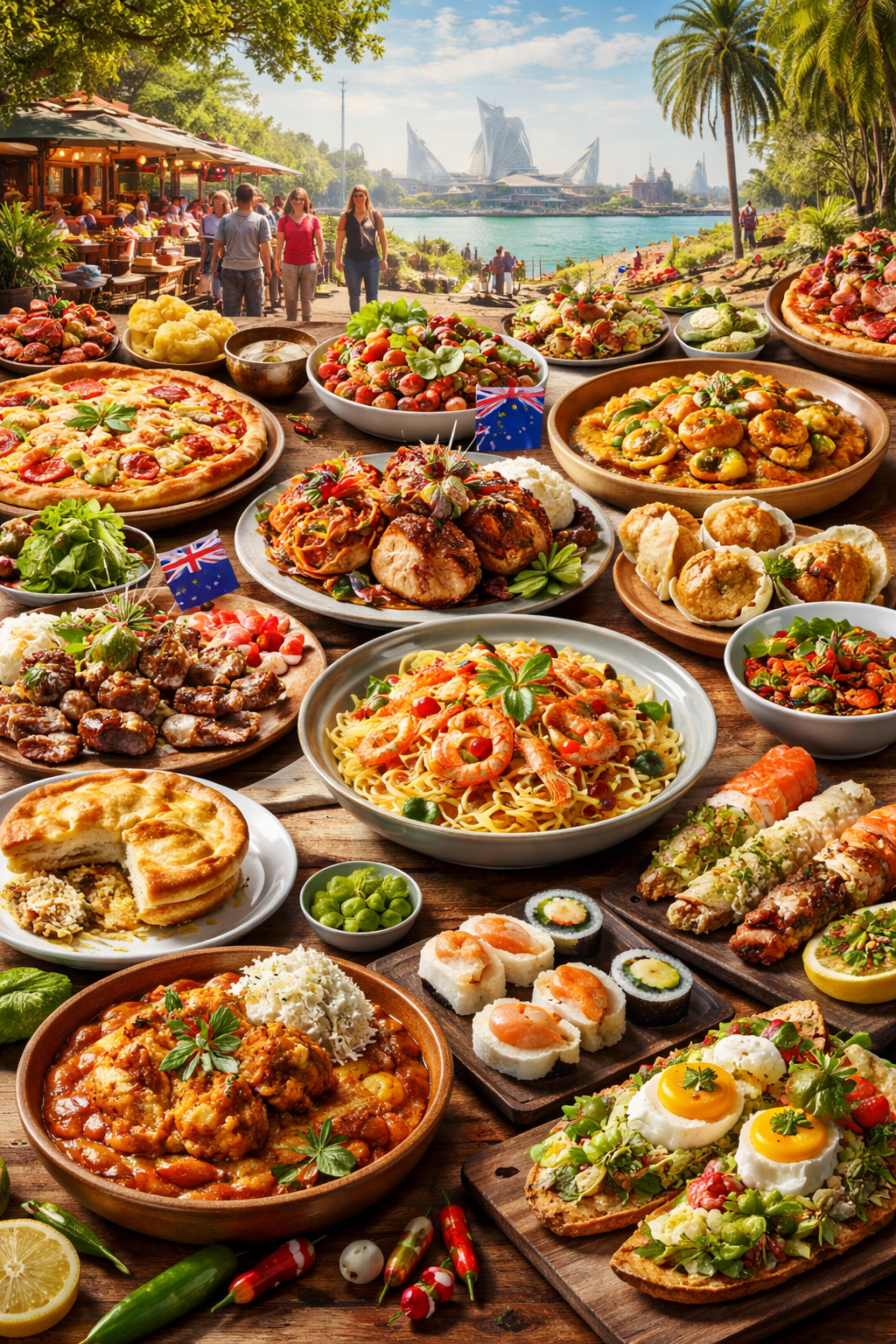
Australia’s culinary evolution is a fascinating journey from the food traditions brought by British colonists to the vibrant, diverse cuisine the country is known for today. Over time, Australian food has absorbed influences from all over the globe, creating a rich tapestry of flavors that reflect the country’s multicultural population. From the early days of British-influenced meals to the present-day fusion of indigenous and international flavors, Australia’s food story is a dynamic narrative of cultural exchange and adaptation.
When the first British settlers arrived in Australia, they brought with them familiar foods from their homeland, including meat pies, roasts, and hearty stews. These early meals were designed to be filling and practical, but they were limited in terms of variety and flavor. Over time, however, as the colony grew and developed, the food scene began to shift, especially with the introduction of new ingredients and cooking methods from immigrants.
The post-World War II era saw an influx of European immigrants, especially from Italy and Greece, who introduced Mediterranean flavors to Australian kitchens. This marked a significant departure from the heavy, meat-focused British dishes that had dominated the culinary landscape. Dishes like pasta, pizza, and grilled seafood became more common, and ingredients like olive oil, garlic, and fresh herbs began to play a larger role in Australian cooking.
By the 1970s and 1980s, Asian cuisine began to make its mark on the Australian food scene. The growing popularity of Chinese, Thai, Vietnamese, and later, Japanese, Indian, and Middle Eastern foods, introduced Australians to new spices, herbs, and cooking techniques. Stir-fry dishes, curries, and sushi are now staples in Australian dining, reflecting the country’s growing cosmopolitan nature.
In the late 20th and early 21st centuries, Australian cuisine began to embrace a more innovative and global approach. The fusion of indigenous Australian ingredients with international cooking styles gained traction, with chefs experimenting with native bush foods such as wattleseed, finger limes, and bush tomatoes. This fusion trend not only highlights Australia’s indigenous food culture but also showcases the country’s ability to adapt and innovate while respecting its roots.
Today, Australia’s food culture is a reflection of its diverse population. The culinary landscape is an ever-evolving mix of traditional British comfort foods, Mediterranean-inspired dishes, Asian influences, and indigenous Australian ingredients. The fusion of these elements has created a unique food culture that is as dynamic and diverse as the people who call Australia home.