
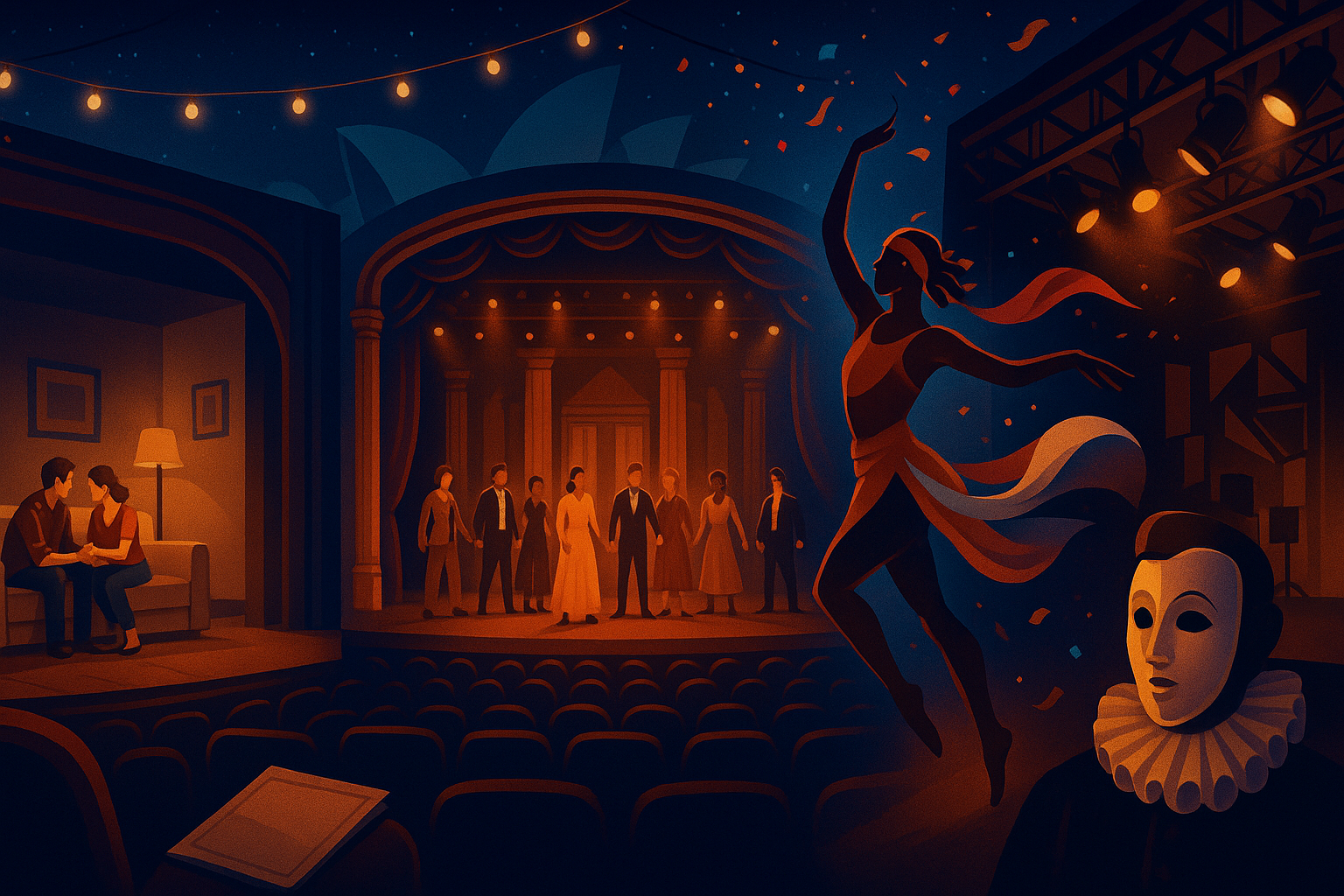
Australian theatre thrives on tension: heritage meeting innovation, myth rubbing shoulders with everyday life. Your must-see list should reflect that duality. Start with the institutional bedrock—Sydney Theatre Company, Melbourne Theatre Company, Queensland Theatre, State Theatre Company South Australia, and Black Swan. Their seasons span fresh Australian scripts, contemporary rewrites of classics, and high-production collaborations. If you want immaculate craft and ensemble precision, these are your safest bets.
For the pulse of new writing, Griffin Theatre Company (Sydney) specializes in premiere Australian plays, often springboards for national tours. Belvoir and Malthouse are indispensable when you crave stylistic swagger—think cinematic sound design, striking scenography, and actors with the freedom to take risks. In Melbourne’s indie ecosystem, La Mama and Theatre Works incubate bold voices and audiences willing to discover the next big thing in a 60-seat room.
Australia’s classical pillar is Bell Shakespeare, whose directors take warmly to editing, rearranging, and reframing the canon. They’re known for lucid storytelling and a knack for rendering verse conversational without flattening its music. On a parallel track, Bangarra Dance Theatre crafts narrative through movement; while not “drama” in the strictest sense, their dramaturgical clarity and character arcs deliver the emotional payoff of great theatre.
The country’s contemporary playwrights give you rich entry points. Seek work associated with Andrew Bovell (family memory and time’s long arcs), Patricia Cornelius (class, gender, and unsentimental truths), David Williamson (satire with bite), Nakkiah Lui (provocation and wit), Leah Purcell (reframing colonial narratives), and Kate Mulvany (adaptation with heart). Productions vary by year and city, but encountering these names on a season brochure is a strong green light.
Festivals expand horizons. The Adelaide Festival regularly lands continent-size productions that test a city’s logistics: large ensembles, international teams, and daring durations. Perth Festival and Sydney Festival foreground experimentation and outdoor staging. Melbourne Fringe serves as a petri dish for performance forms—verbatim theatre, cabaret-dramas, headphone-guided encounters. In Brisbane, September’s program often mixes riverfront spectacle with intimate studio shows.
Audience experience matters, too. Australian theatre invests significantly in design; sound and lighting are storytellers in their own right. Expect sub-bass thrum you feel in your sternum, LED topographies that redraw architecture, and projections that breathe with the actors. Directors here are unafraid of silence, negative space, and sudden tonal shifts; you might walk into a comedy and leave with a bruise-shaped thought.
Practicalities: preview nights yield cheaper tickets, and many companies offer under-30 prices, rush seats, or occasional pay-what-you-can slots. Accessibility is robust compared to many markets—captioned, relaxed, and audio-described performances are easy to find. If you’re theater-hopping, cluster venues: in Sydney, match STC with a nearby Opera House play; in Melbourne, pair MTC Southbank with a Malthouse or La Mama evening.
For a balanced itinerary, pick one classical reinterpretation (Bell), one major new Australian play (Griffin/Belvoir/Malthouse), one festival headliner, and one small-room discovery. That quartet will show you the country’s range—from refined tradition to revolutionary form.