
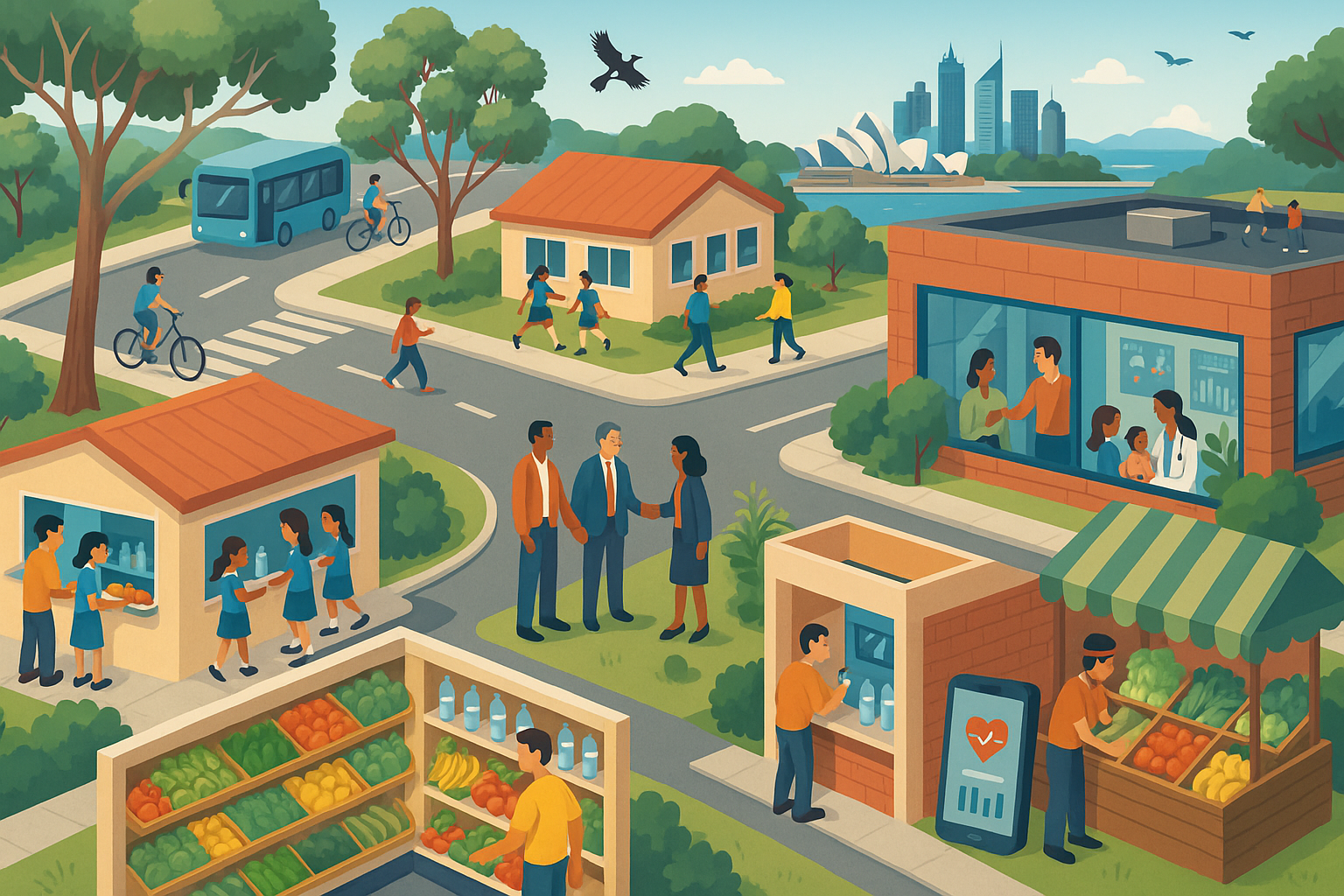
Physical inactivity and sedentary time are powerful contributors to obesity in Australia, yet the barrier is less about motivation and more about design. Many suburbs are stitched together by high‑speed roads, disconnected footpaths, and long distances between daily destinations. Reversing this requires both infrastructure and programs that invite people to move.
Start with streets. Continuous footpaths, wide crossings with priority for pedestrians, protected bike lanes, shade trees, drinking fountains, and traffic calming make short trips practical and pleasant. Schools benefit from safe‑routes programs, bike education, and secure end‑of‑trip storage. Councils can embed “20‑minute neighbourhood” principles in planning, ensuring groceries, parks, clinics, and public transport are within a short walk or ride.
Public spaces earn their keep when they host activity: free outdoor gyms, marked walking circuits, community sport courts, and well‑lit ovals that support evening use. Programs like parkrun, Heart Foundation Walking, and workplace step challenges build routine. Voucher schemes that reduce the cost of junior sport and swimming lessons help families through the cost‑of‑living crunch and can be targeted to lower‑income postcodes.
Workplaces shape the day for millions. Active design—central staircases, sit‑stand options, end‑of‑trip facilities—and norms like walking meetings and micro‑breaks counter prolonged sitting. Employers can integrate movement into wellbeing strategies, offer time‑flexible shifts to support exercise, and partner with local councils on commuter routes. For shift workers, lighting, safety, and 24‑hour venue access are critical.
Health services can prescribe movement. GPs and allied health professionals provide brief interventions, write exercise prescriptions linked to local facilities, and refer eligible patients to exercise physiology. Telehealth and wearables enable remote coaching and feedback. When exercise programs are culturally safe and delivered in familiar community settings, adherence improves—especially for Aboriginal and Torres Strait Islander peoples and culturally and linguistically diverse communities.
Children’s routines deserve special attention. Embedding active play in early childhood services, quality daily physical education in schools, and screen‑time limits at home create habits that track into adulthood. Parents benefit from practical tips: walk‑to‑school rosters, family bike skills sessions, and weekend discovery maps of local parks and trails.
Evaluation keeps progress real. Councils can track modal shift (walking, cycling, public transport), park usage, and injury metrics; workplaces can monitor sitting time and participation; programs can report retention and equity of reach. Funding should reward delivery in low‑activity, high‑need areas, not just easy wins in already active suburbs.
When movement is woven into streets, schedules, and social life, “exercise” stops being a chore and becomes an ordinary way of getting around. That shift—supported by infrastructure, programs, and clinical advice—helps Australia lower obesity rates while improving mental health, social connection, and climate resilience.