A Statistic That Defines the Stakes
Only 3% of clothing sold in Australia is made in Australia, a figure published by the Australian Fashion Council as part of its National Manufacturing Strategy . The remaining 97% arrives through imported supply chains, most of it governed by volume-driven offshore production economics . That 3% is not a rounding error. It is a small, fragile ecosystem of cutters, machinists, pattern makers, and independent labels that has survived against a structural tide running in the opposite direction.
What the 3% Club Actually Looks Like
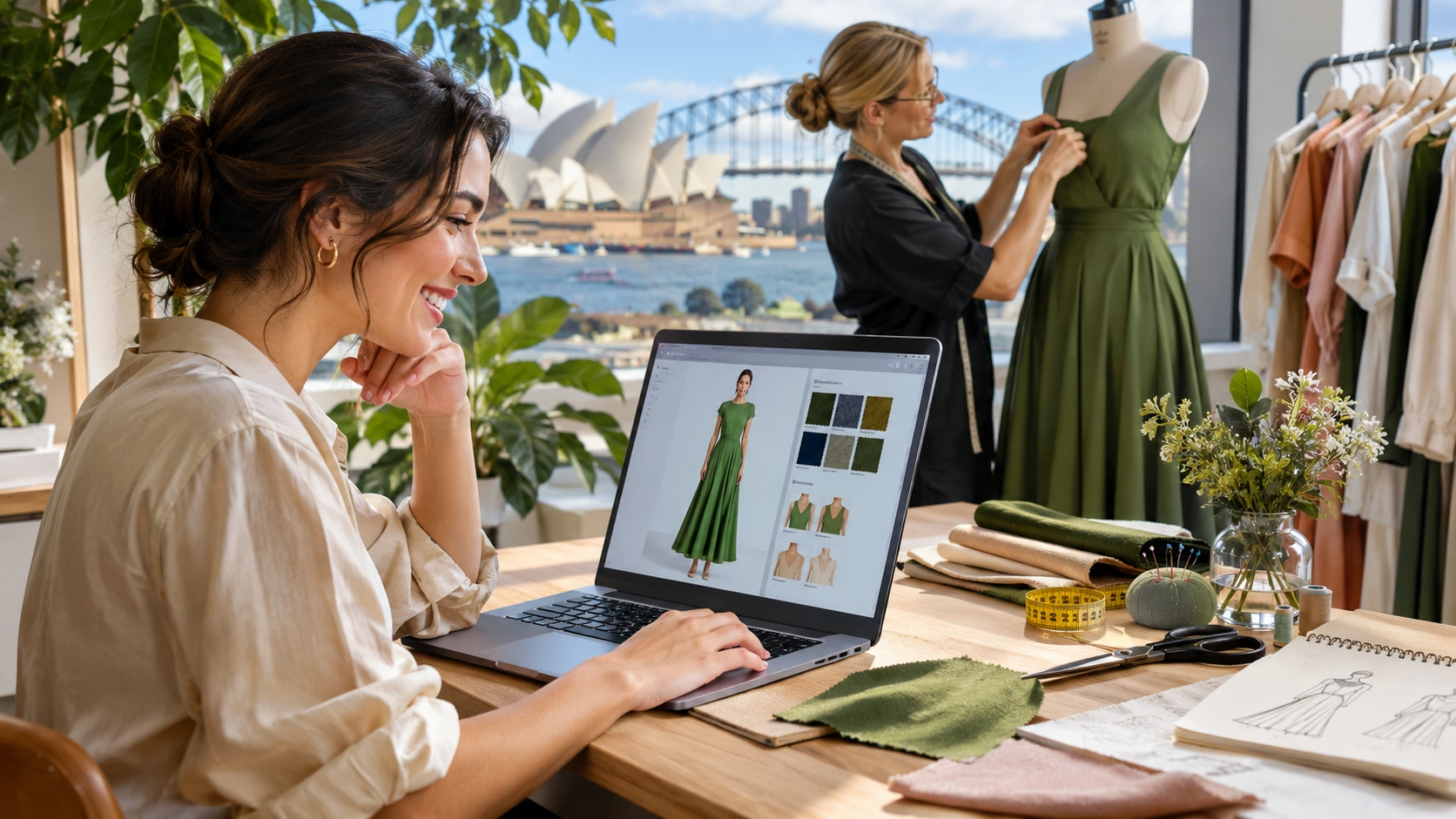
Philosophy Australia, a Sydney-based womenswear label, is one of the brands in that 3% Club. Its owner and designer, Alison Lennard, describes a production model in which around 90% of output is made to order . The implications are operational, not merely philosophical. “I can design something, have a pattern made, sample it, fit it and move it into production within days, not months,” Lennard writes in Ragtrader. “If something suddenly sells, we can react. If it doesn’t, we haven’t committed to thousands of units in advance” .
For production runs under 100 units, Lennard can make a pair of pants locally quicker and often cheaper than offshore manufacturing, which relies on volume to achieve competitive unit costs . The made-to-order model is not a premium-priced sacrifice. It is a commercial strategy that aligns batch size with real demand.
The Network Behind a Single Garment
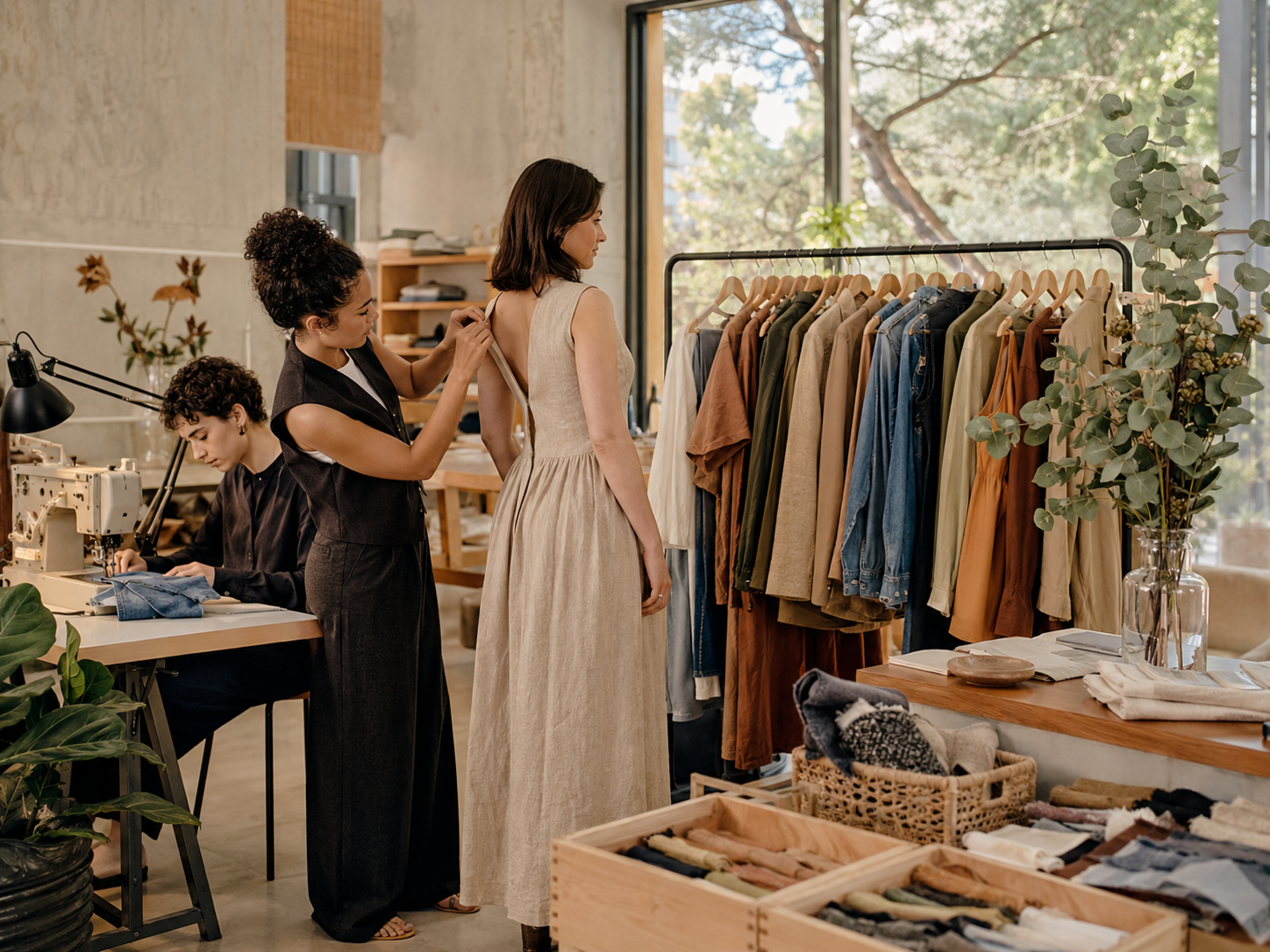
Local made-to-order production is not a solo craft. Philosophy Australia works with two cutting contractors and three manufacturing businesses across Sydney, a network representing around 40 people, many of whom Lennard has collaborated with for at least 18 years . The production method itself is distinctive: one machinist makes a garment from beginning to end rather than repeating a single seam on a line, creating accountability and skill retention that offshore assembly-line production cannot replicate .
This network density is both the strength and the vulnerability of Australian local manufacturing. “Lose one manufacturer and you don’t just lose one business,” Lennard warns. “You potentially lose knowledge and capacity, and eventually the ecosystem becomes so small that even brands wanting to manufacture here can’t” .
The Misconception That Local Is Always More Expensive
The persistence of the 3% statistic is often explained by a single assumption: that Australian manufacturing cannot compete on price. The made-to-order experience challenges that assumption at the lower-volume end of the market. When a brand is not paying for speculative inventory, warehousing, markdowns, and the carbon cost of long-haul freight, the true cost comparison changes. Made-to-order also eliminates the minimum-order penalty that forces brands to overcommit to quantities they may never sell .
Building Resilience Rather Than Scale
The brands driving Australia’s made-to-order revival are not trying to replicate the volume economics of global fast fashion. They are building smaller, more responsive businesses that treat production as a relationship rather than a transaction. Philosophy Australia’s Lennard puts it directly: she would “rather build a resilient business than a bigger one” . In a market where only 3% of clothing is locally made, resilience is not a luxury. It is the only viable growth strategy.