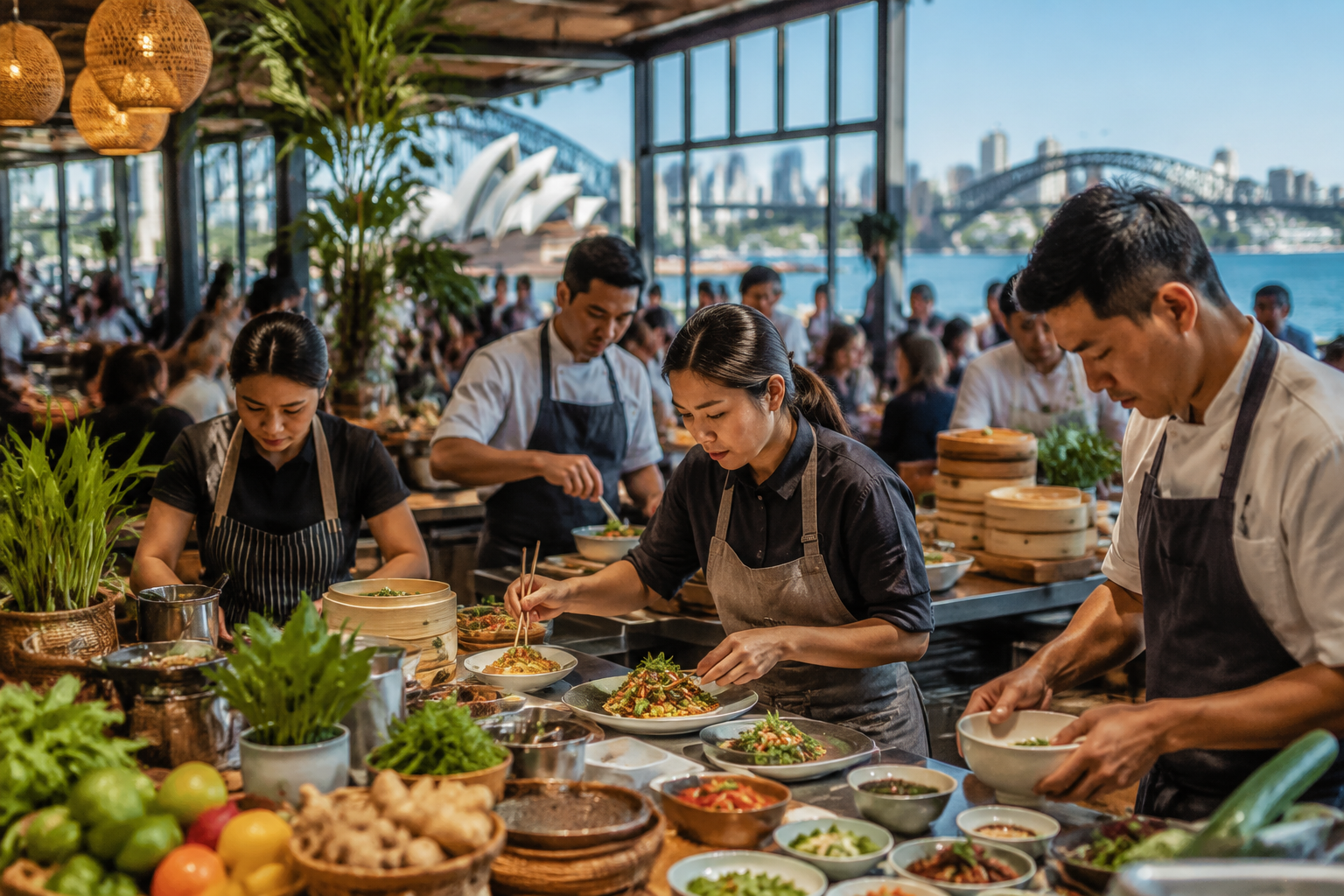

In January 2026, Marriott International launched its Culinary Academy in Australia—a two-year, fee-free apprenticeship program that combines structured on-site training with mentorship from the company’s executive chefs. Trainees are paid at the unqualified cook award rate of at least $25.85 per hour, compared to the standard apprenticeship rate of $15.46, and upon completion they qualify with a Certificate III in Commercial Cookery.
The Business Case for Direct Training
The academy addresses a structural problem that has persisted for years: the hospitality sector’s chronic shortage of skilled chefs. James Goodwin, CEO of Accommodation Australia, described chef shortages as “a structural long-term hindrance for the industry,” and positioned the Marriott initiative as “well positioned to address this skills shortage”. By integrating training directly into hotel operations, Marriott eliminates the gap between classroom learning and workplace application. Trainees rotate through different culinary stations, absorb the culture of professional brigades, and build relationships with the chefs who will eventually become their colleagues and mentors.
Financial Incentives and Talent Attraction
The pay differential is a deliberate strategy. At $25.85 per hour, trainees earn substantially more than they would under a standard apprenticeship arrangement. This financial security is designed to attract high school graduates, career changers, and vocational students who might otherwise be deterred by the low wages typical of early-stage culinary training. The program also removes tuition costs entirely, addressing the debt aversion that disproportionately affects students from lower socioeconomic backgrounds.
Mentorship as Curriculum
Apoorva Kunte, Executive Chef at The Westin Melbourne, began his own career with Marriott in 2013 and is now involved in developing the academy. “I look forward to working with our up-and-coming culinary talent, sharing my knowledge as they start a long and successful career path,” he said. The mentorship dimension is not incidental—it is the core value proposition. Culinary skills can be taught in any well-equipped kitchen; professional judgment, leadership under pressure, and the tacit knowledge of how a brigade operates are transmitted through sustained relationships.
Implications for the Broader Education Sector
The Marriott Academy represents a shift in the locus of culinary education from standalone institutions to integrated industry environments. If successful, it may prompt other hotel groups and restaurant collectives to develop similar programs. For traditional culinary schools, the challenge is to articulate what they offer that industry-embedded training cannot: breadth of technique, exposure to diverse cuisines, and formal qualifications that travel across employers. The most likely outcome is a complementary ecosystem in which vocational institutions provide foundational training and industry academies offer advanced specialisation.