In an era of climate anxiety, many children feel a disconnect from the natural world. Australia, with its dramatic landscapes and iconic megafauna, offers a therapeutic remedy: the wildlife encounter. However, not all encounters are created equal. The trend for 2026 is shifting towards immersive, ethical experiences that teach children about the web of life rather than just providing a photo op.
The Sanctuary Movement
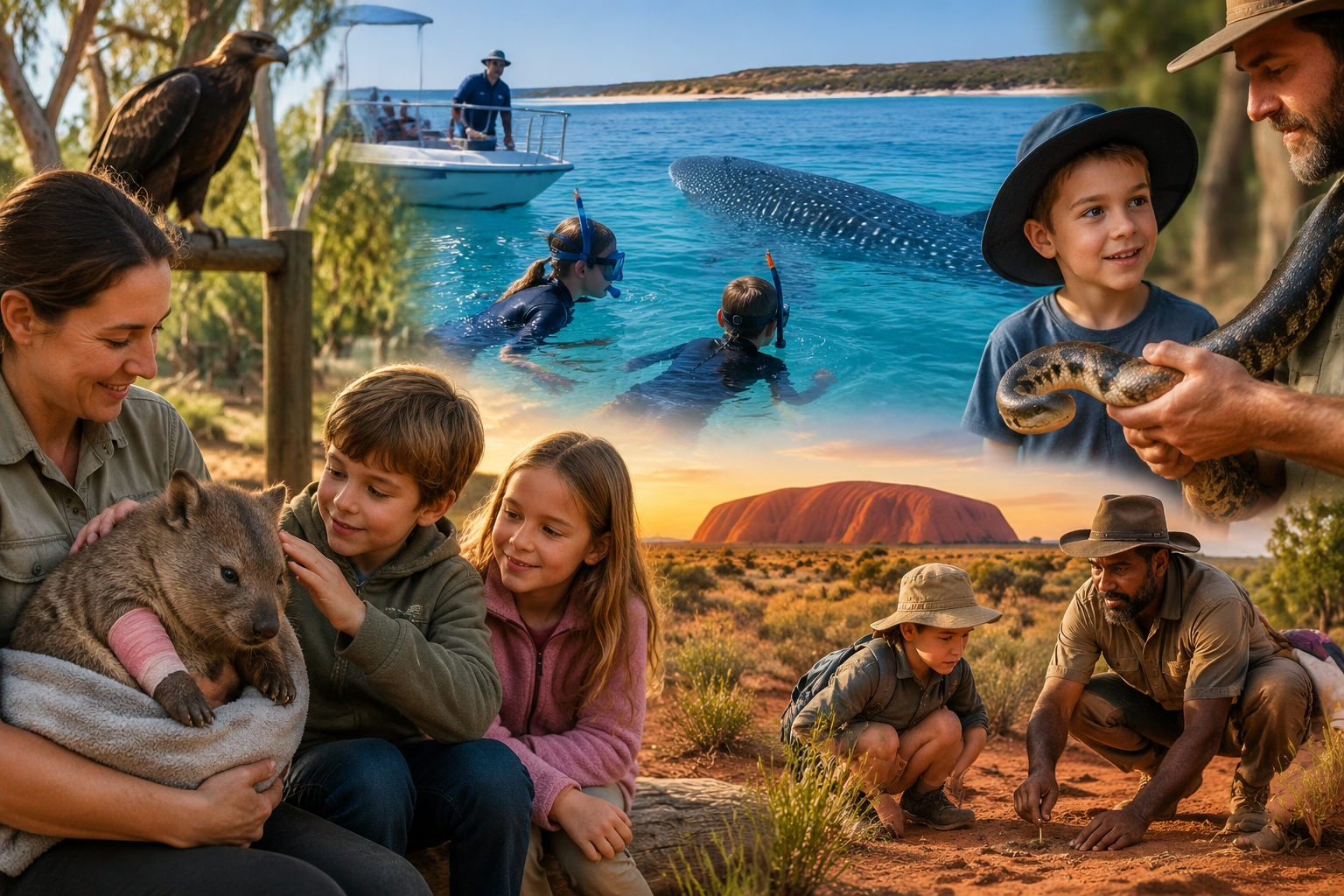
The closure of traditional drive-through zoos and the phasing out of “koala cuddling” in many states has paved the way for sanctuary models. Places like Bonorong Wildlife Sanctuary in Tasmania operate primarily as hospitals for injured wildlife. Here, children witness the “ugly” side of nature—bandaged wombats, recovering eagles—and learn that humans have a responsibility to repair the damage caused by cars and deforestation.
This narrative is powerful. It transforms the child from a passive spectator into a potential helper. Feedings are conducted by staff, but the educational talks focus on habitat loss and what families can do back home, such as building insect hotels or planting native flowers.
The Mega-Fauna Classroom
For a more dramatic lesson in scale, Western Australia’s Ningaloo Reef offers an ethical model for marine megafauna tourism. Swimming with whale sharks is strictly regulated by the Department of Biodiversity, Conservation and Attractions (DBCA). The experience is led by scientists who take identification photos of the sharks.
Children learn that these gentle giants are data points in a global conservation effort. The lesson is clear: observing nature is a privilege that comes with rules. This instills a respect for boundaries that is often missing in standard tourism.
Reptiles and Reading
Often, the most effective educational tools are the ones that scare us. Australia’s reptile parks, such as the Australian Reptile Park in New South Wales, capitalize on the “ick” factor to teach biology. The park is famous for its life-saving venom-milking program. Children watch keepers extract venom from snakes and funnel-web spiders to produce antivenom.
It is a visceral demonstration of the value of biodiversity. A child who might be afraid of spiders learns that these creatures save human lives. This cognitive dissonance is the essence of learning.
Learning from the Land
The most authentic education comes from Indigenous rangers. Programs in the Northern Territory and Far North Queensland invite families to “read the country.” This involves tracking animals, identifying edible plants, and understanding fire management. It is a slow, observational form of learning that contrasts sharply with the fast-paced stimulation of city life, grounding children in the rhythms of nature.