Every year, Australians throw away an estimated 780,000 tonnes of textile waste, according to the Australian Government Department of Climate Change, Energy, the Environment and Water. That figure, updated in early 2026, places textiles among the fastest-growing waste streams in the country. Vintage fashion offers a powerful counterweight. By extending the life of garments that already exist, Australian consumers can dramatically reduce the environmental damage caused by new clothing production.
The Textile Waste Crisis Down Under
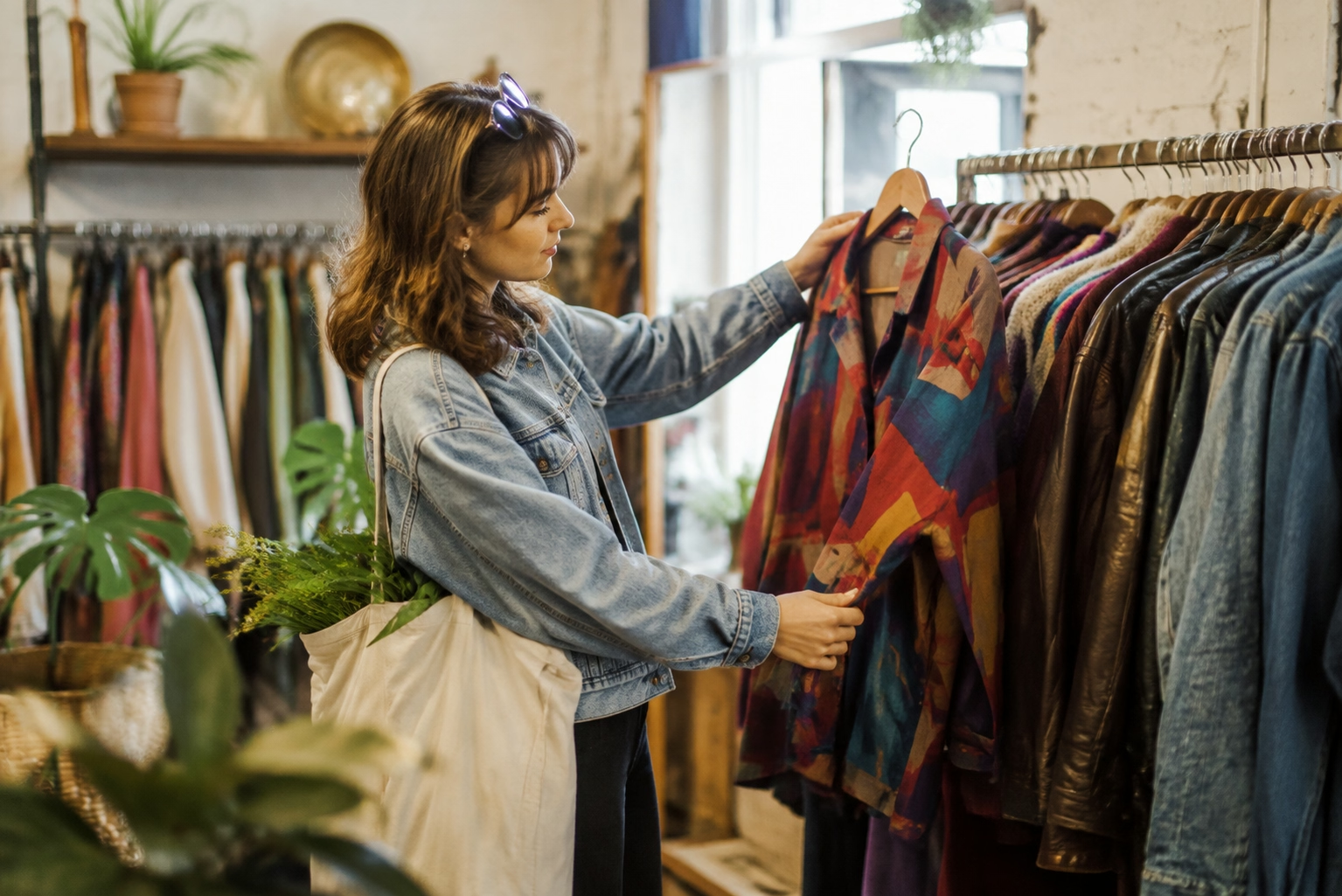
The problem is not simply volume. Most discarded clothing is made from blended synthetic fibres that do not biodegrade. When sent to landfill, these garments release methane as they slowly break down, contributing to climate change. Fast fashion’s relentless production cycle makes the situation worse: the average Australian buys 56 new items of clothing per year, many of which are worn fewer than seven times before disposal. Vintage shopping interrupts this cycle at its root. A pre-loved 1980s wool blazer or a 1970s cotton prairie dress requires no new raw materials, no new dye, and no new factory emissions. Its carbon footprint is already sunk.
Vintage as High-Impact Climate Action
Sustainability experts in Australia increasingly point to vintage fashion as one of the most accessible forms of individual climate action. The Australian Circular Fashion Report 2026 found that buying one secondhand garment instead of a new equivalent saves, on average, 3.6 kilograms of CO2 emissions and 2,000 litres of water. Multiplied across thousands of purchases, the impact is substantial. Op shops and vintage retailers are leaning into this message. Many now display carbon-saving labels alongside price tags, helping shoppers understand the environmental value of their purchase.
Policy and Retailer Responses
Government policy is beginning to catch up. Several state governments, including Victoria and New South Wales, have introduced textile stewardship programs in 2026 that provide grants to repair cafes, upcycling workshops, and vintage clothing initiatives. These programs recognise that the most sustainable garment is the one that already exists. Vintage stores have become unlikely partners in waste reduction. By curating high-quality retro pieces and making them desirable, they keep clothing in circulation for decades rather than months.
The shift is not just about individual guilt or sacrifice. Vintage fashion is fun, creative, and increasingly trendy. It allows Australians to express personal style while reducing their environmental impact. As more consumers connect the dots between their wardrobes and the planet, vintage shopping is moving from a niche eco-habit to a mainstream sustainability strategy. The 2026 data leaves little doubt: the future of Australian fashion is not in making more clothes. It is in wearing the ones we already have.