
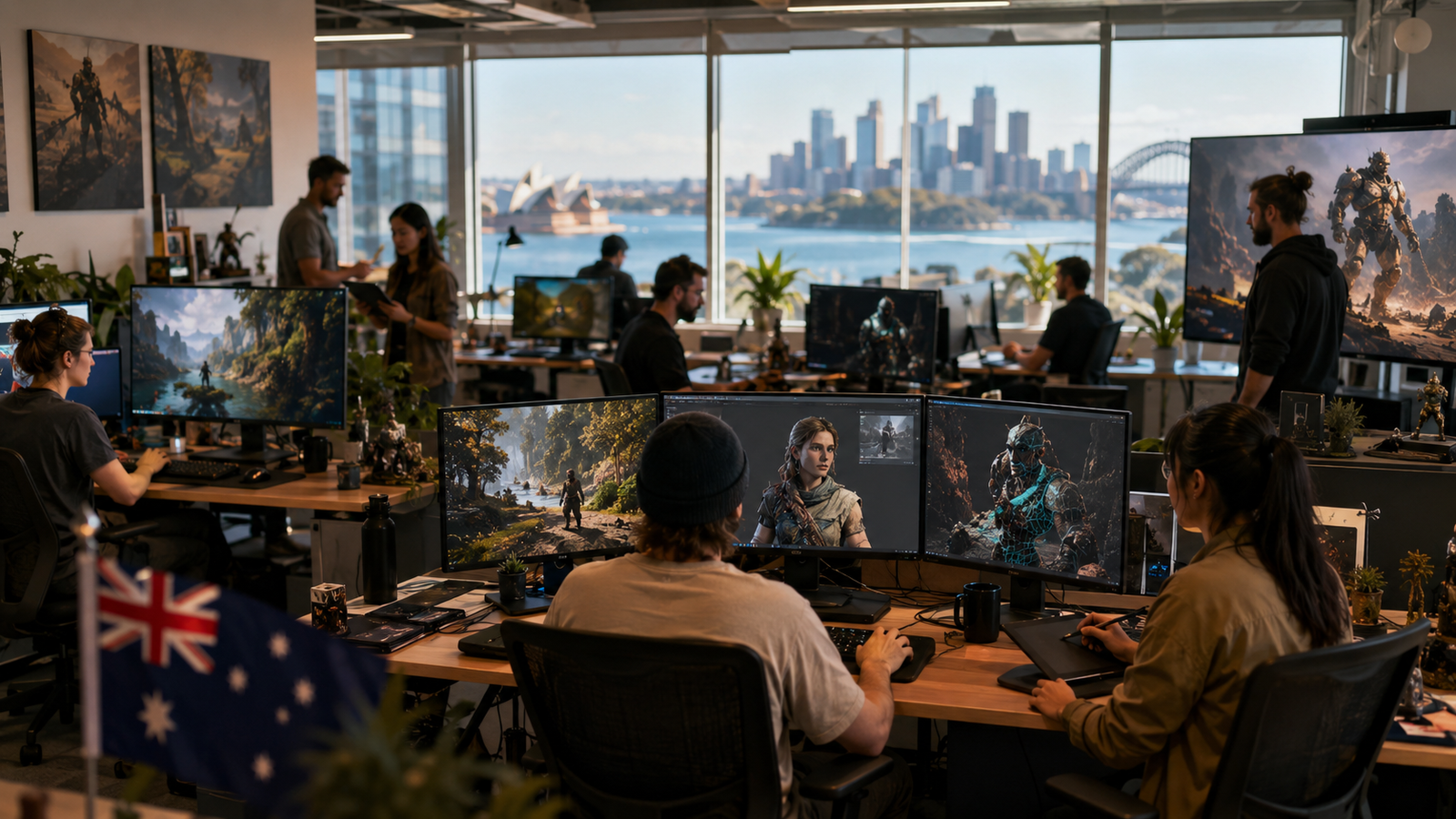
Australia Has Entered a More Strategic Phase of Growth
Australia’s video game sector is approaching 2026 with greater credibility than it held a decade earlier.
Successful independent titles have demonstrated the country’s creative ability. Federal and state support has made game development a more visible policy issue. International companies are also paying closer attention to Australia as a production location.
Yet the next stage will be harder.
An emerging industry can gain attention through a few successful products. A mature industry must repeatedly create games, retain skilled workers and survive changing global market conditions.
Australia’s central challenge is therefore moving from isolated success stories toward a durable development ecosystem.
The Digital Games Tax Offset Changed the Investment Conversation
A major structural development was the introduction of the federal Digital Games Tax Offset.
Eligible developers can access a 30 percent refundable tax offset on qualifying Australian development expenditure, subject to the program’s rules and minimum expenditure requirements.
Official information is published by the Australian Taxation Office:
The measure gives investors and international studios a clearer reason to consider Australian production.
However, incentives alone do not create successful games. They reduce certain costs, but companies still need strong leadership, experienced employees and access to global audiences.
Original Intellectual Property Could Deliver the Greatest Value
Ownership Matters in the Entertainment Economy
Australia’s biggest long-term opportunity may come from intellectual property.
A studio that performs contract development earns income from its production work. A company that creates and retains ownership of a successful original game may build an asset with much greater potential.
That property can generate sequels, licensing, merchandise and adaptation opportunities.
Australian titles including Cult of the Lamb and Unpacking illustrate why distinctive ideas matter. Their international profiles are linked to identities that audiences can immediately recognise.
The goal for 2026 should not simply be to produce more games. It should be to create more durable entertainment properties.
Global Competition Remains Intense
Australia is competing against established game development centres with deeper pools of experienced workers and capital.
Canada, the United Kingdom and several European markets have spent years building specialised production clusters.
Australia also faces geographic challenges. Its studios may be physically distant from major publishers and investors, even though digital collaboration has reduced that disadvantage.
Another pressure comes from global industry volatility. Large-scale layoffs and project cancellations across international gaming have shown that rapid expansion can be followed by painful contraction.
Australian companies need to grow carefully rather than assuming that worldwide demand will always rise.
A Stronger Industry Requires More Than Blockbuster Hits
The healthiest future would include companies of different sizes.
Large international studios can provide employment and training. Mid-sized local businesses can retain experienced teams. Independent developers can experiment with new ideas.
This mix is important because creative industries become fragile when they depend on a small number of employers or projects.
Education, investment, public support and publishing expertise must also develop together.
A talented graduate needs somewhere to gain experience. A promising studio needs access to finance. A successful game needs international marketing and distribution.
Gaming’s Impact Will Spread Across Entertainment
The significance of the sector extends beyond game sales.
Real-time graphics technology is increasingly relevant to film and virtual production. Game music reaches audiences through streaming and live performance. Popular interactive properties can support merchandise and screen adaptation.
The strongest argument for Australia’s game industry in 2026 is therefore broader than economics.
Gaming is becoming part of the infrastructure of modern entertainment.
Australia’s ability to benefit from that shift will depend on whether it can turn incentives and individual creative successes into an industry capable of building companies, careers and globally valuable intellectual property for the long term.