
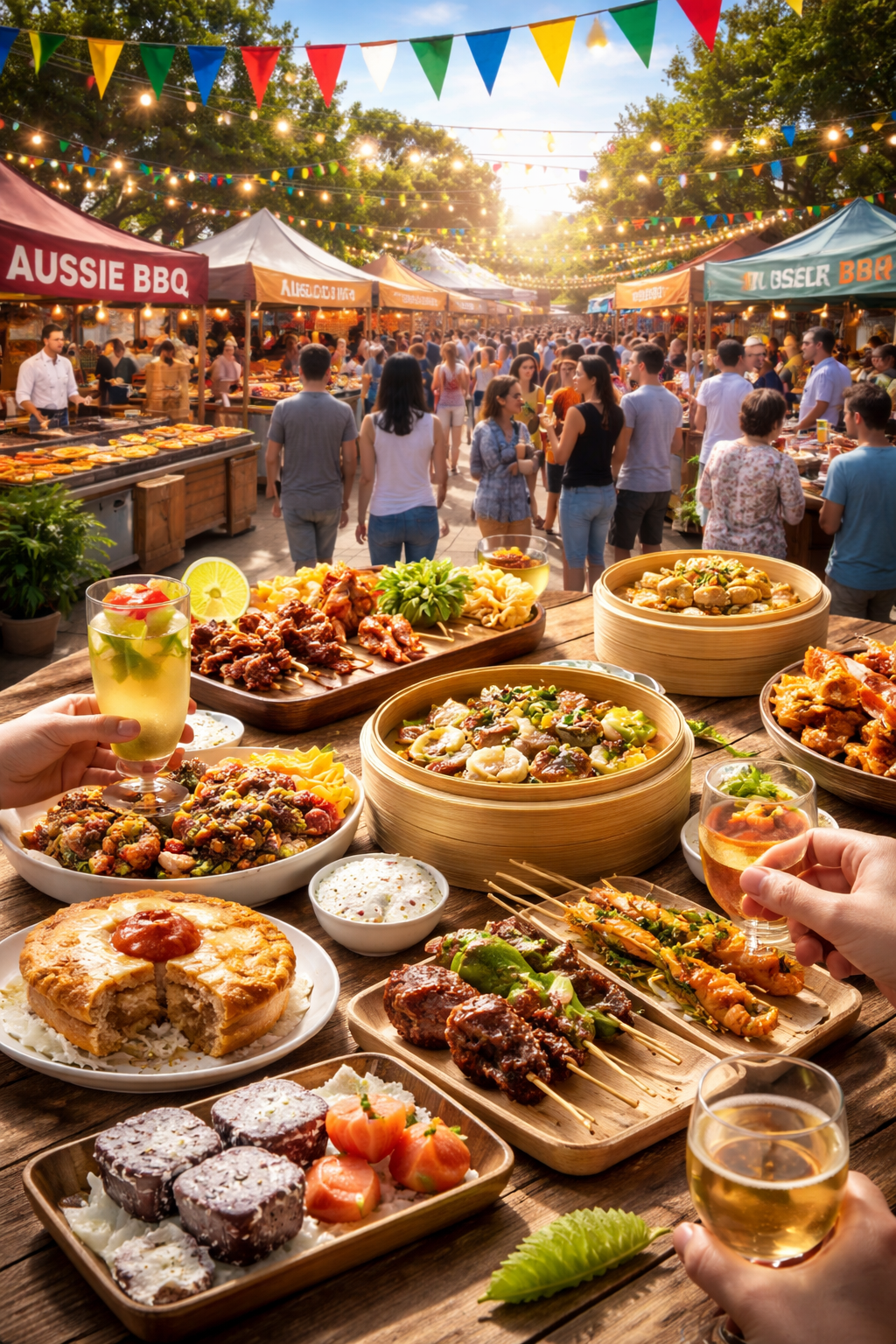
Australian festival food is often described as “modern Aussie,” but that phrase makes the most sense when you understand how multicultural the country’s everyday eating really is. At cultural events, food becomes a living archive: each stall reflects a community’s history, migration story, and the ways traditions adapt to a new home. Walking through a festival precinct can feel like flipping through a cookbook written by a whole nation.
Many of Australia’s most beloved “local” habits actually come from global influences that have been embraced over generations. Mediterranean communities helped shape a national love for olives, grilled meats, and long lunches. Asian cuisines introduced new approaches to freshness, herbs, and quick, vibrant meals. Middle Eastern bakeries and charcoal grills brought aromatic spices, flatbreads, and shareable platters into the mainstream. At festivals, these influences aren’t blended into anonymity—they’re celebrated in their own right.
This is why festival menus in Australia can jump from dumplings to souvlaki within a few meters. You’ll see stalls serving hand-folded buns and noodles alongside skewered meats, falafel wraps, and pastries filled with cheese or nuts. Many vendors tailor portions and packaging for the setting: food that can be eaten with one hand, shared among friends, or sampled in smaller sizes so visitors can taste more. The festival format encourages curiosity, and vendors respond with approachable versions of their classics without stripping away identity.
What makes the experience uniquely Australian is the way cuisines often sit side by side and cross-pollinate. It’s common to find fusion items that would make little sense elsewhere but feel natural here: spice blends borrowed across borders, sauces adapted for local ingredients, or street foods reimagined with Australian produce. A dish might keep the technique of one culture while featuring seafood, meat, or herbs sourced from nearby farms. In that sense, festivals highlight a national pattern—Australia doesn’t just “import” cuisines; it integrates them into a new context.
Desserts tell a similar story. Traditional sweets appear—baklava, Italian-style pastries, Asian rice-based treats, European cakes—while also sharing space with familiar Australian icons like lamingtons or pavlova-style creations. You can often taste how local preferences influence sweetness levels, portion sizes, and flavor combinations, especially when native ingredients appear in modern desserts.
Beverages reinforce the multicultural theme, too. Along with wine and craft beer, festivals might offer bubble tea, sugarcane drinks, spiced teas, or fruit-based coolers—each tied to specific community celebrations. Even when a festival isn’t explicitly “food-focused,” drink stalls provide another way to experience cultural variety without committing to a full meal.
For visitors who want more than a quick bite, many festivals include storytelling elements: vendor signage explaining origins, cooking demos, or stage programs that connect food to dance, music, and language. These details matter because they frame the meal as cultural knowledge rather than just consumption. Asking vendors about ingredients or preparation often leads to small but memorable lessons—what a spice mix means, why a dish is eaten on certain holidays, or how recipes changed after arriving in Australia.
If you approach an Australian festival with the mindset of a food explorer, you’ll notice something powerful: the cuisine isn’t a single tradition competing for attention. It’s a conversation among many traditions—one that keeps expanding, and tastes better because of it.