
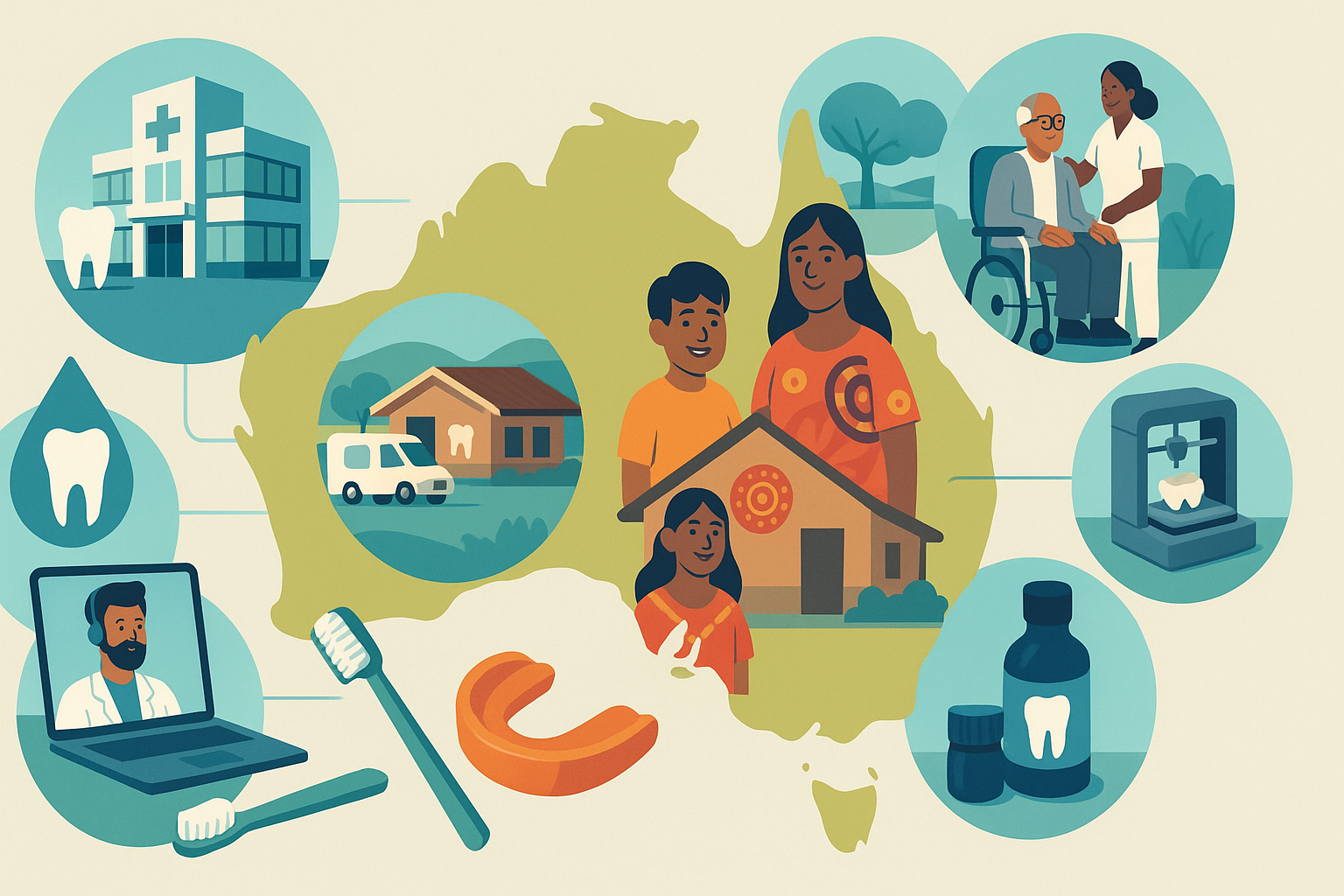
Australia’s oral health outcomes reflect decades of preventive policy and a persistent access gap for adults. Public investment concentrates on children and priority adults through programs like the CDBS and state‑funded clinics. Most other adults depend on private dental practices, backed by out‑of‑pocket payment or extras cover. This mixed approach produces world‑class clinical standards alongside affordability challenges.
Prevention is the system’s strongest lever. Water fluoridation remains a foundational public health measure; brushing with fluoride toothpaste twice daily, flossing or interdental cleaning, and regular professional cleans slow the progression of caries and periodontal disease. Clinical guidelines now emphasise risk‑based recall intervals rather than one‑size‑fits‑all six‑month visits, helping allocate chair time where it is most impactful.
Workforce and geography shape access. Major cities offer abundant providers and specialist services, whereas rural and remote communities rely on fly‑in, fly‑out teams, mobile clinics, and outreach. Recruiting and retaining dentists, oral health therapists, and hygienists outside metropolitan areas requires scholarships, bonded placements, and professional support. In the meantime, teledentistry helps with triage, review of images, and care planning to prioritise limited in‑person slots.
Equity initiatives target populations with the highest need. Aboriginal and Torres Strait Islander communities benefit when services are community‑controlled, culturally safe, and integrated with broader health programs. Aged‑care residents face distinct risks—xerostomia from medications, difficulty with oral hygiene, and a higher burden of root caries. Embedding oral assessments in aged‑care standards, training care staff, and enabling domiciliary visits can reduce preventable hospitalisations.
Financial literacy is under‑discussed. Many Australians hold extras insurance yet underutilise included check‑ups and cleans before annual limits reset. Conversely, some pay premiums that exceed likely benefits. Consumers should compare policies annually, verify provider networks, and consider setting aside funds for predictable needs like night guards or orthodontics rather than relying solely on insurance.
Clinical advances support minimally invasive care: resin infiltration for incipient lesions, selective caries removal to preserve pulp vitality, and silver diamine fluoride for non‑surgical arrest of decay in high‑risk patients. Combined with dietary counselling—reducing free sugars, limiting grazing patterns, and balancing acidic beverages—these approaches can stabilise disease without complex procedures.
Australia’s path forward involves doubling down on prevention, extending public coverage where it yields the most population health benefit, and leveraging technology to reach the underserved. When prevention, access, and affordability align, the result is not just fewer fillings, but better quality of life across the lifespan.